What Is Draft?
The distance from the waterline to the lowest point of the keel – the only real answer to ‘can I get in there?’
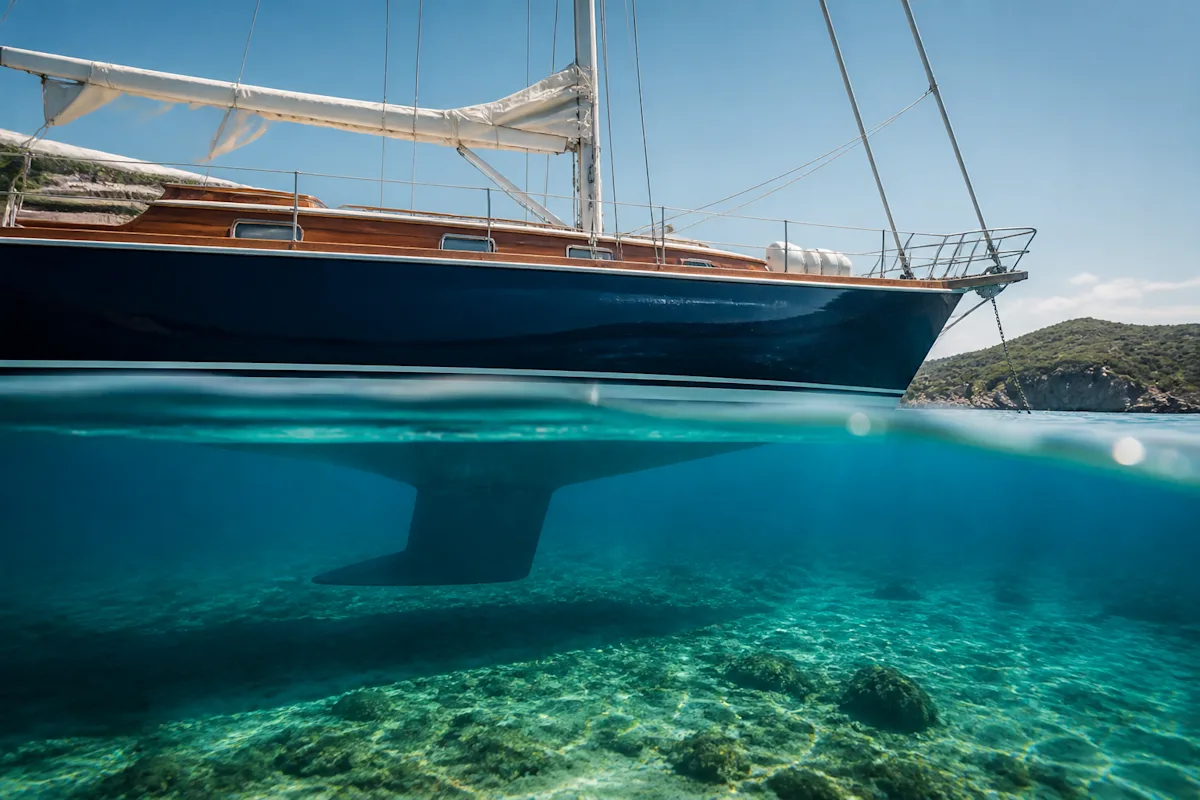
Draft is the vertical distance from the waterline to the boat’s deepest point, such as the keel, skeg or the bottom of the propeller. It changes with load: full tanks and a crowded boat increase the draft. It is the physical limit that governs route and berthing decisions.
Shallow anchorages, marina approach depths and channel transits are all about this figure. Most groundings come from only having a rough idea of the boat’s draft.
What you need to know
Loaded draft: the brochure figure is for an empty boat; the draft of a loaded boat is different, so work out your own loaded draft properly with one real measurement.
Instrument offset: if the depth sounder’s transducer offset is wrong, the instrument may say there is water when the keel is already in the mud; set the offset to suit the draft.
Leave a margin: what matters is not the number on the display, but the actual clearance beneath it.
The rule in shallow water is simple: know your boat’s loaded draft and set the depth sounder’s offset accordingly. ‘2 metres’ on the screen does not always mean ‘2 metres of clearance’.