What Is Fouling?
The build-up of weed, mussels and barnacle growth on the hull — a living load that quietly taxes speed, fuel and engine health.
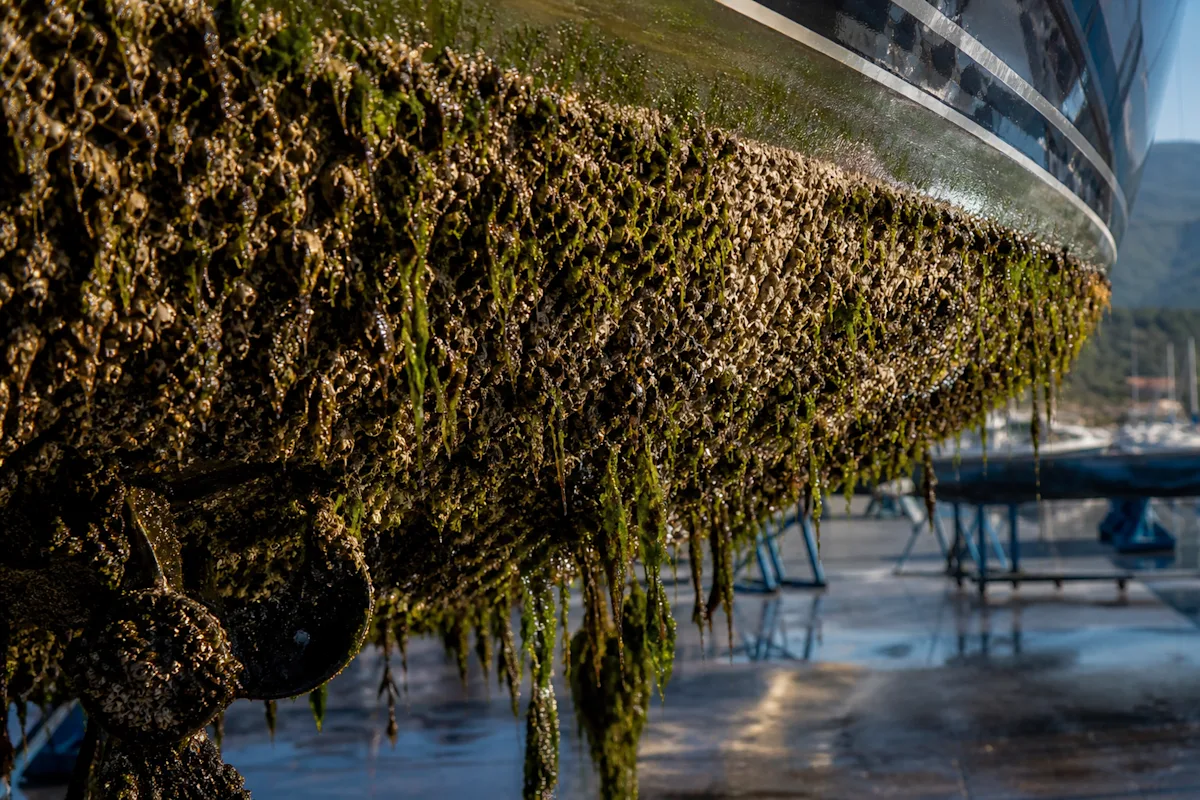
Fouling is the build-up of marine growth on underwater surfaces, and it develops in layers. The cost is invisible but measurable: even a light slime film noticeably increases fuel burn, while a hull and propeller with hard growth need serious extra power to make the same speed.
The table below sets out the fouling layers.
Fouling layers
Layer | What |
|---|---|
Slime (film) | The first bacterial layer, which immediately affects fuel burn |
Algae | The second stage, when drag increases |
Hard growth (mussels, barnacles) | The heaviest load, with a serious loss of power |
If the question is, 'the boat doesn't go like it used to, is the engine tired?' the answer is often not in the engine but on the hull below the waterline. There are knock-on effects too: fouled seawater intakes (air-con, engine cooling) clog up, sensors are blinded, and seacocks become stiff.
The management trio is the right antifouling, diver cleaning in season (6-8 weeks is a sensible interval in busy Göcek), and full maintenance at the annual haul-out. Use helps too: 'we hardly ever go out, so she's spotless' is exactly the wrong way round; the less a boat moves, the faster she fouls.