Bilge Pump Guide: Selection, Faults and Maintenance
A bilge pump is the boat’s insurance policy. This guide brings together pump types and capacity selection, the most common faults (won’t run / runs constantly / won’t discharge), and a maintenance routine in one article - plus what an increase in pump cycles can signal and when to call in a professional.
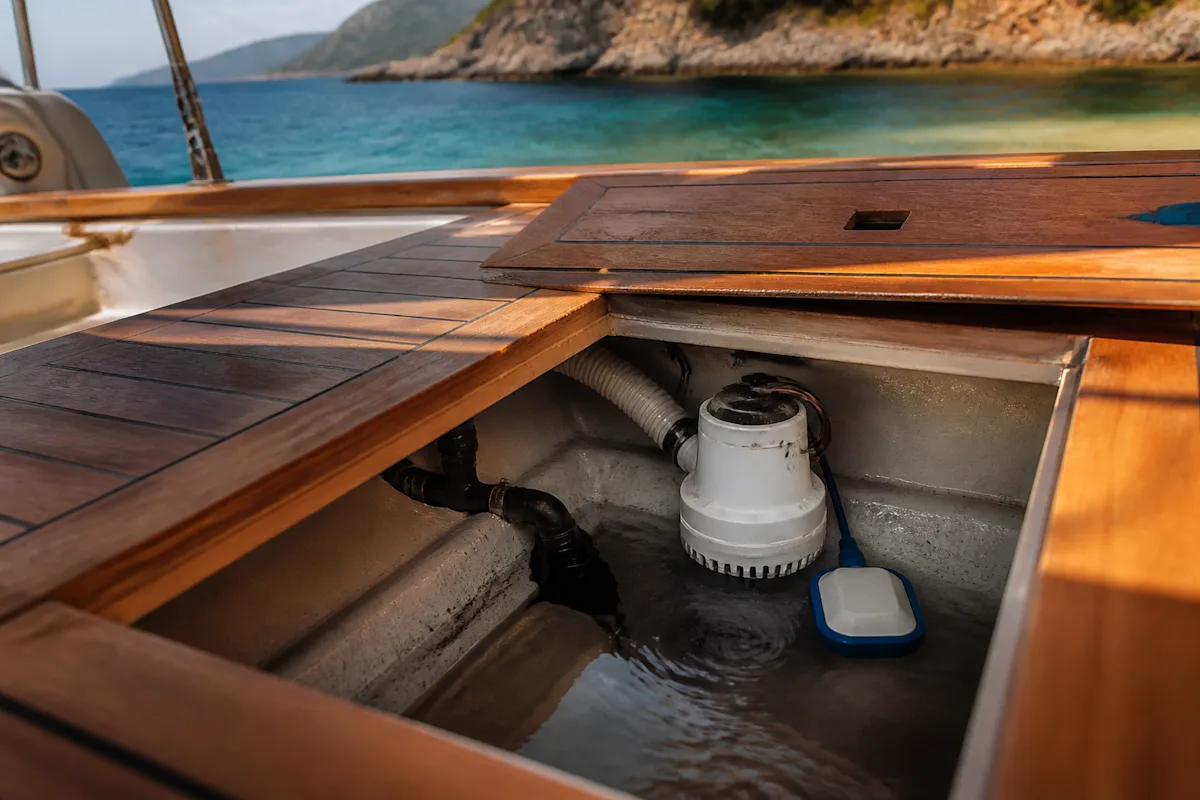
A bilge pump is one of the least thought about but most critical bits of kit on board: when all is well you forget it exists, but on a leaking night it is the only thing standing between the boat and a yard bill. In this guide we’ve set out how to choose the pump, the most common faults, and the maintenance routine that helps extend its life.
How does a bilge system work?
The bilge is the lowest internal space in the boat; drips from the shaft seal, rainwater and condensation collect there. The bilge pump then discharges that water overboard through the hull outlet. In a modern setup, the pump is triggered by an automatic float switch (float switch): as the water level rises, the float lifts and starts the pump. A properly fitted system also has a manual override and - depending on the boat’s size - a high-water alarm as well.
Choosing the right pump
Type: 12V submersible centrifugal pumps are standard; diaphragm pumps tolerate dry running better and can leave the bilge drier. On most boats, the right arrangement is a centrifugal main pump + a manual backup.
Capacity (GPH): the figure on the manufacturer’s label is a laboratory value; hose run height and bends reduce the real flow rate. Rule of thumb: choose the next size up from the stated figure - on a 10-metre boat, aim for a staged setup rather than a single small pump.
Staged setup: an متوسط-capacity pump low down for everyday use + a second high-capacity pump higher up for emergencies, plus an alarm. This arrangement turns a single pump failure into a manageable issue rather than a disaster.
Electrical: correct cable size, waterproof connections and a dedicated fuse are essential; the bilge circuit should be fed so it still works even if the main battery isolator is switched off.
The three most common faults and how to read them
1) The pump won’t run at all
The order is clear: first the fuse and connections, then the float switch (lift it by hand - if the pump runs, the fault is with the float switch; hair, slime and oil film are classic causes of sticking), and finally the pump itself. Fishing line/hair wrapped around the impeller is the number one killer of submersible pumps.
2) The pump runs constantly or too often
This is the most important symptom to pay attention to. There are three likely causes: a faulty float switch, backflow through the check valve/hose (water draining back and re-triggering the pump), or a real leak. On boats fitted with a pump counter, an increase in cycle count is often the first sign of a leak from the shaft seal, hose clamp or seacock - this should never be dismissed as “the pump has gone mad”; until the source is found, assume there is a leak.
3) The pump runs but doesn’t discharge water
Air-locking (especially in lines with a check valve), a blocked hose or a split hose are the usual culprits. Check whether water is coming out of the hull outlet first - that is the first place to look.
Maintenance routine
Once a month: lift the float switch by hand and test it; keep the bilge clean and dry (an oily film makes the float stick).
Once per season: check the hose route, clamps and hull outlet; open up the impeller and clear out hair/fishing line.
Before winter: clean and dry the bilge thoroughly; if you’re in a frost-prone area, don’t leave water sitting in the hose.
At all times: keep at least one manual pump/bucket accessible on board - when the power is lost, it’s your only friend.
When should you call a professional?
In these three cases, the issue is bigger than a pump swap and the system needs to be checked properly: if the number of pump cycles/operating frequency has increased for no clear reason (a leak should be investigated), if there is an oil/diesel film in the bilge (the engine side needs checking), and if there are signs of heat or melting on the electrical side. In these cases, the right approach is not to change a part, but to find the source by measurement.
Final word: a bilge pump is not just a single device, it is a system - pump + float switch + hose + electrics + alarm. When every part of the system is kept in order, even a leak at night becomes just another routine job.
Frequently asked questions
How many GPH does my boat need?+
The figure on the label does not show the real flow rate; hose height and bends can reduce output significantly. The practical approach is to choose the next size up from your calculated need, and on boats over 9-10 metres to move away from a single pump and toward a low/high staged arrangement.
Should a check valve be fitted?+
It helps prevent backflow and reduces frequent cycling, but it also reduces flow and increases the risk of air-locking. It is often unnecessary on short, low runs; on long/high runs it can be useful if fitted correctly — the decision should be made according to the hose route.
Why does the pump run so often?+
Three causes should be checked: a faulty float switch, backflow from the hose, and a real leak. An unexplained increase in cycling should be treated as a leak until the source is found — the shaft seal, clamps and seacocks are the first suspects.
How many years does a bilge pump last?+
There is no fixed service life; it depends on use and how clean the bilge is kept. With annual impeller cleaning and float switch testing, it can run trouble-free for 5-8 years. When replacing it, best practice is to renew the float switch and connections as well.