Anode Guide: The Quiet Part That Protects Your Boat
The anode is the one part of the boat designed to sacrifice itself: it takes galvanic corrosion instead of the propeller. How it works, the difference between zinc, aluminium and magnesium, when to replace it, and what rapid wastage is warning you about.
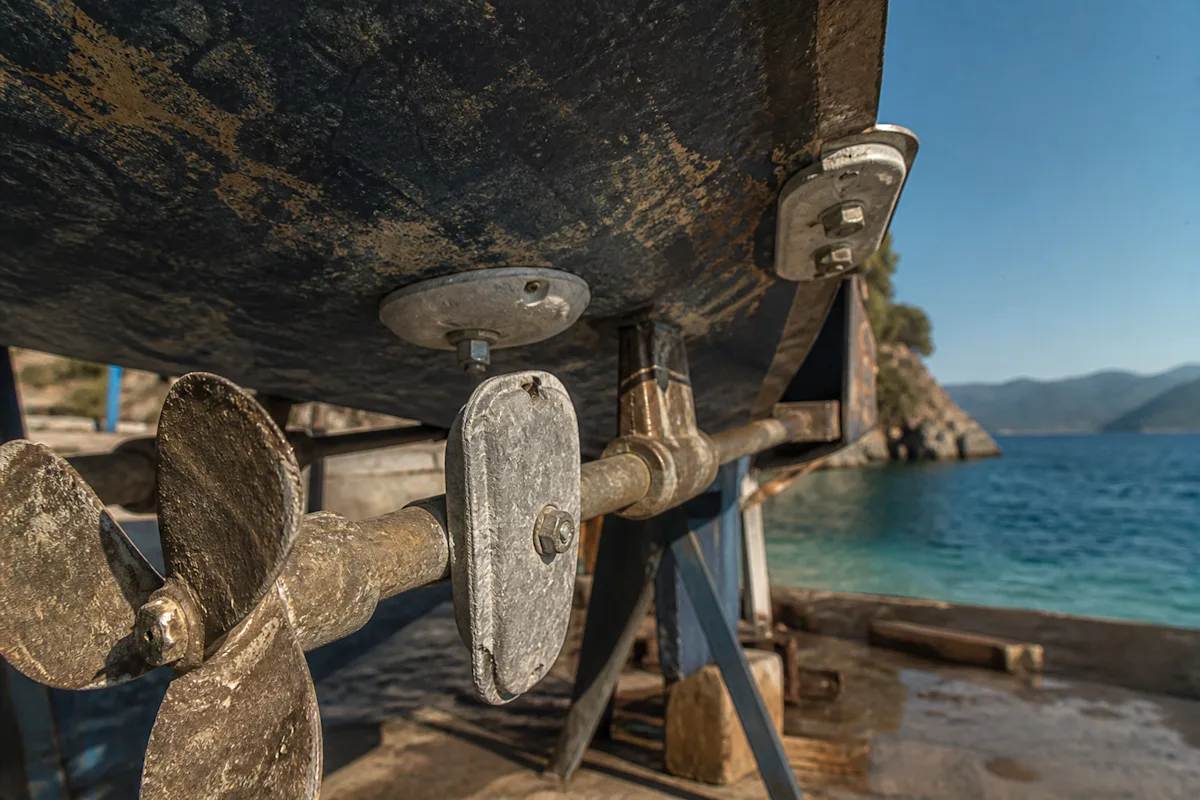
The anode is the 'sacrificial' metal that protects your boat's underwater metals by giving itself up to corrosion. The principle is simple: in seawater, different metals create a battery and the most active metal wastes away. The anode is deliberately chosen to be the most active metal, so it corrodes instead of the propeller, shaft and valves.
But the right anode depends on the water. The wrong material will either offer no protection at all or waste away far too quickly. The table below shows which anode to use in which water.
Anode material - water table
Anode material | Suitable water | Note |
|---|---|---|
Zinc | Saltwater (sea) | Classic, most widely used |
Aluminium | Salt and brackish water | Longer service life, modern choice |
Magnesium | Fresh water | Wastes away very quickly in the sea, not used |
Where and when to replace
Replacement threshold: replace the anode once it has wasted by more than half; waiting until it is 'completely gone' defeats the point of the protection.
Check points: shaft, propeller, rudder, trim tabs, bow thruster, saildrive leg and internal engine anodes (heat exchanger).
Haul-out routine: inspect all anodes at every haul-out; they can also be changed underwater by a diver.
If your anodes are wasting away faster than expected, the problem is not the anode: first check for stray current, then look at the galvanic isolator or the marina earth. Fitting a bigger anode is not a cure, it is just masking the symptom.
Frequently asked questions
My anodes did not wear out in a year — can I leave them?+
What matters is the percentage: if they have not gone past 50% and the surface is still active (matte and rough), they can stay in service. A shiny, passive-looking anode, or one past halfway, should be replaced. Haul-out is the yearly chance to inspect them properly — 'it’s still there' is the most expensive sentence in the book.
Can I switch from zinc to aluminium?+
Yes — aluminium anodes work in saltwater and are recommended in many modern installations. When changing over, best practice is to convert all anodes to the same type and remove the old ones completely.
I did not know there was an anode inside the engine — is that normal?+
Very common: internal engine anodes (in the cooling circuit) are not visible from outside and are among the most neglected anodes. Learn where they are on your engine model and make them part of the maintenance schedule — cooling-system corrosion is the bill for ignoring these small parts.
My anodes waste faster when I’m on marina shore power — why?+
Shared shore-power earthing can create an unintended galvanic network with neighbouring boats; a boat with stray current can consume your anodes. A galvanic isolator is standard protection against this — if wastage speeds up, have the system tested.