Boat Sea Trial Guide: What to Check Underway
Some faults only show up under load - that is why the sea trial is an essential half of the survey. From leaving harbour to full throttle, from manoeuvring to bilge checks after the run: the step-by-step programme.
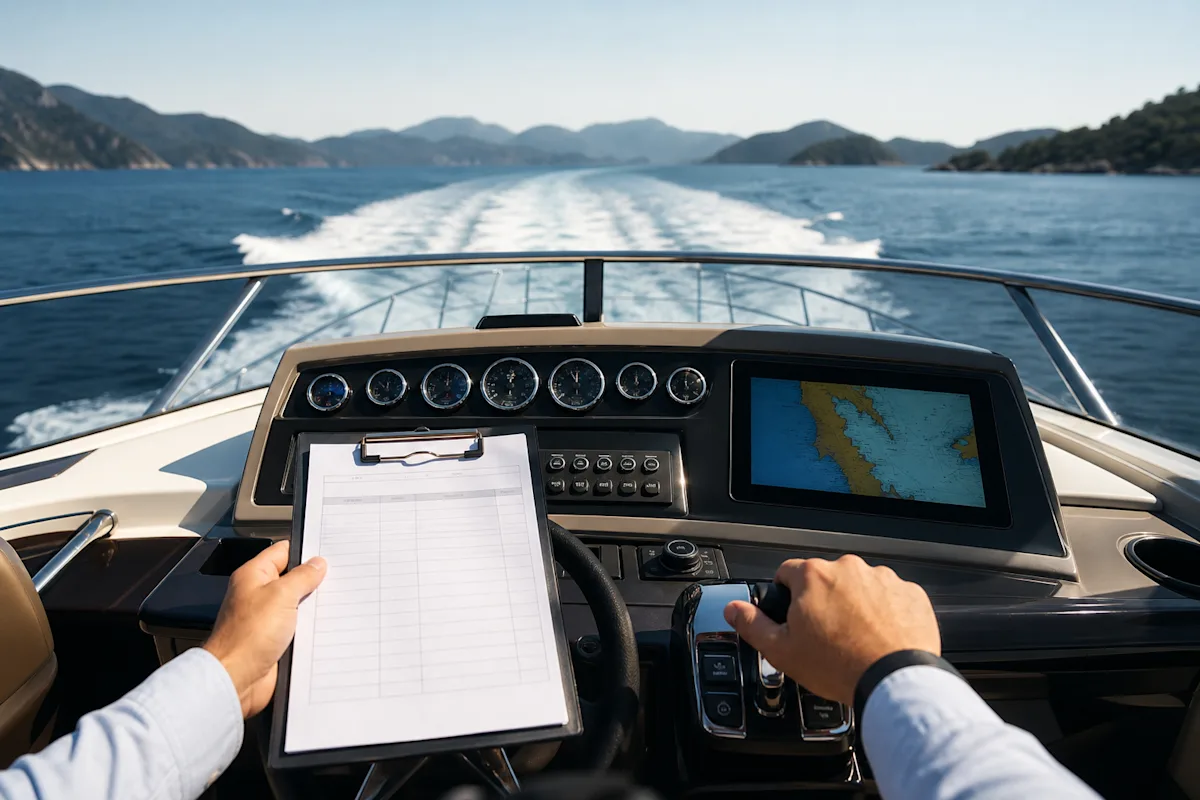
A sea trial is the only way to see how a boat really behaves afloat, and it is just as critical to the purchase process as the survey. An engine that 'runs' ashore can tell a very different story under load.
The table below shows what to check during the sea trial.
What to check during the sea trial
Item | What to look for |
|---|---|
Maximum engine rpm | Does it reach the maker’s stated rpm (propeller/fouling) |
Vibration | Vibration at a specific rpm: alignment, propeller, bearings |
Steering and manoeuvring | Play, steadiness, reverse control |
Electronics | Do the plotter, autopilot, VHF and instruments work |
Sails (on a sailing boat) | Hoisting, reefing, furling, shape, winches |
The sea trial should start with a cold engine (the first-start behaviour matters), then be loaded up once it has warmed through. An engine that cannot reach its rated rpm at full throttle is a red flag: that is where excess pitch, a fouled hull or engine wear start to be separated out.
If possible, carry out the test in real sea conditions, not inside the marina. And bring along your own technical eyes for the trial - a surveyor or a trusted engineer - so the seller’s 'everything is perfect' story is balanced by independent observation.
Frequently asked questions
How long should a sea trial last?+
For a meaningful test, allow 45-60 minutes: cold start, a run inside the harbour, gradual loading in open water and a return check all fit into that time. A quick 'out of the marina and back again' trip is not a test, it is a jaunt.
The seller will not accept a sea trial - is that normal?+
Suggesting a short run because of fuel and time costs is normal; but a seller who refuses a proper load test entirely is a warning sign. The sensible middle ground is to show you are a serious buyer (deposit/intent) and book the trial for the same day as the survey.
Should the test be postponed if the weather is poor?+
Yes, if it is beyond safe limits; but a slight chop is actually a good test bed - the boat speaks in real conditions. A glassy test will not reveal the vibration and creaks that show up in a bit of sea.
If everything was fine on the test, do I still need a survey?+
Yes: the sea trial and the survey answer different questions. The trial shows how the boat behaves under load; the survey covers its structural and measurable condition - moisture and compression are not measured at sea. Together, they give proper cover before purchase.