Your Boat Is Taking on Water: What to Do in the First 10 Minutes
The moment you see unexpected water in the bilge, you need a protocol, not panic: from checking whether it tastes salt or fresh, to tracing the source, carrying out a temporary fix, and knowing when to call for help — a step-by-step plan for the first 10 minutes.
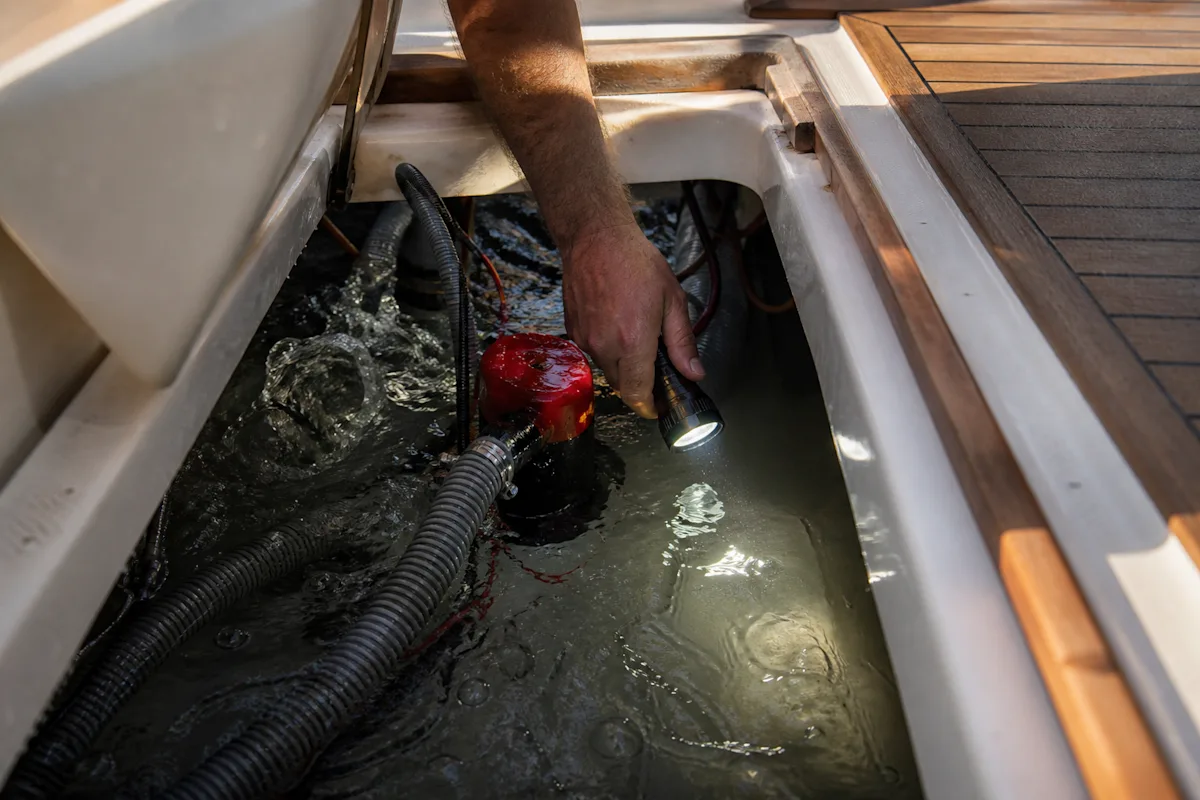
If a boat is taking on water, the first 10 minutes decide its fate. Panic is the worst crew mate; in a flooding situation time is the enemy, because even a small broken valve can let in hundreds of litres a minute, and bilge pumps are designed for drips, not major ingress.
The difference between finding and plugging the source, and hoping the pumps will keep up, is the boat’s fate. The order is clear.
First 10 minutes
Stay calm and look for the source: the most likely places are skin fittings, the shaft seal, hose connections and the toilet line.
Plug the source or shut the valve: there should be a tapered wooden bung hanging next to every seacock, sized for that fitting.
Run every pump: automatic, electric and manual; get them all working.
Check the crew and anyone injured, and get lifejackets ready.
If the situation is serious, have the VHF ready: the DSC red button sends your identity and position.
An emergency leak kit (tapered bungs, emergency putty, hose clips) and a sketch of all seacocks should be kept somewhere known on board. An hour of preparation is a lifetime of insurance.
Once the water ingress is under control, the job is still not finished: do not continue the passage without a permanent repair to the source and, if needed, a diver’s check or a haul-out inspection. ‘It’s stopped for now’ is not a solution, it is a delay.
Frequently asked questions
Is it normal to always have some water in the bilge?+
An ideal bilge is dry; however, on some boats — especially those with traditional packed gland shaft arrangements — a slight drip is part of the design. Knowing what is normal is critical: learn the usual level for your own boat and judge any increase against that baseline.
Is a wooden tapered bung really necessary?+
Yes — it’s cheap, simple and can save the day in a valve or hose failure. Best practice is to tie the correct bung for each seacock alongside it. It should be treated as standard safety kit, just like a fire extinguisher.
I couldn’t find the leak, but the water stopped — can I forget about it?+
No. A leak that stops is not a leak that has been fixed; it may be rainwater, a change in trim, or an intermittent fault. Make a note of the incident with the date and have a systematic leak check carried out at the first opportunity, if needed out of the water.
Can a boat sink while berthed in a marina?+
Rarely, but yes — and almost every case follows the same pattern: a small ingress + a failed pump + nobody checking for weeks. The cure is the same too: working pump systems, a bilge circuit with a live power supply, and a regular inspection routine.