Your First Service Handover File: Equipment Identity, Observations and Open Questions
Organise equipment details, owner observations and dated images before a service appointment. Build a reusable briefing file that preserves unknowns, links attachments and tracks document receipt clearly.
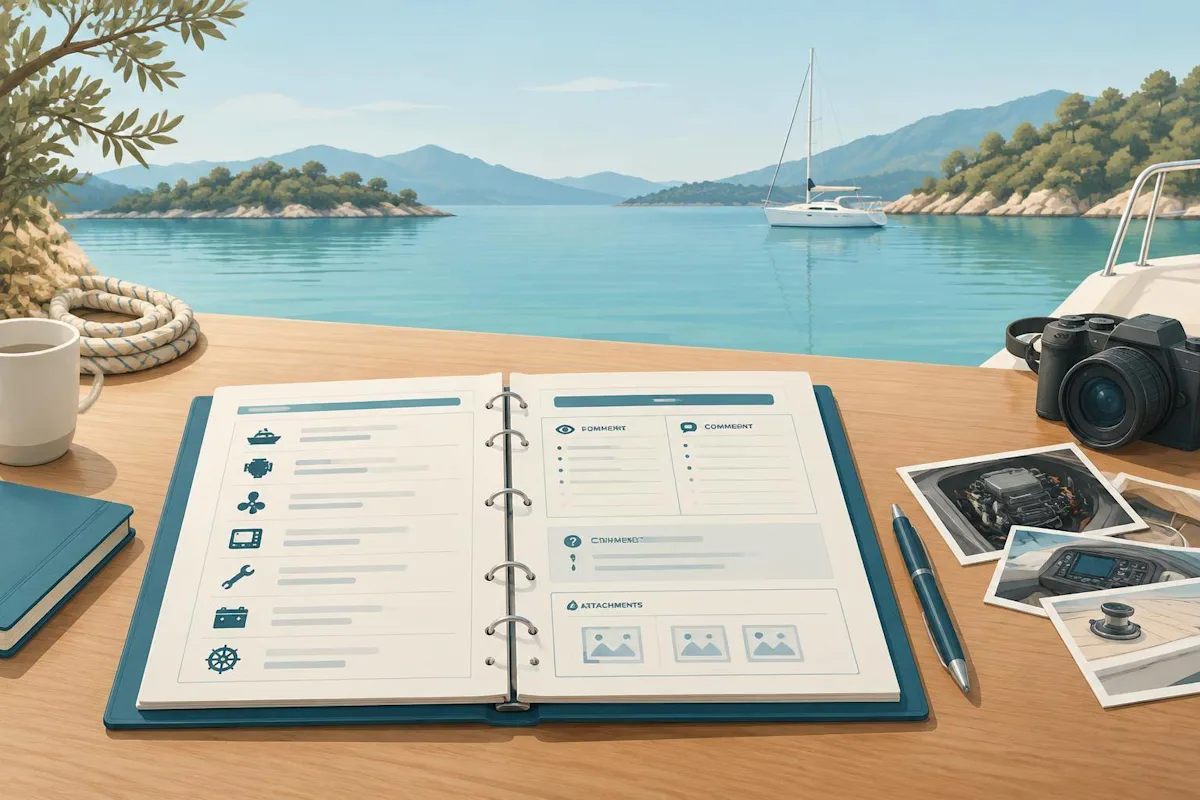
A first service briefing should communicate what you already know and where that information came from, not name a fault. This guide uses existing documents, previously recorded observations and images. It involves no new tests, dismantling or diagnosis. The result is a reusable owner file that connects each item of equipment to its records and separately tracks which documents were sent.
1. Define the file and preserve each version
Create a main folder with Briefing, Equipment, Attachments and Correspondence subfolders. Start the briefing with these blank fields: file name [ ], prepared by [ ], preparation date [ ], version [ ], equipment codes covered [ ], service contact [ ]. This is your preparation framework, not a record issued by a workshop. Leave an undecided contact or date marked unknown rather than filling the space with an assumption.
Add a scope statement naming the material you are sharing: existing identity documents, owner observations, image attachments and questions awaiting replies. Follow it with a short contents list using one consistent name for each document. Ask your actual workshop which file format it prefers. Keep a separate copy of the version you send so that later edits do not silently change your record of the original submission.
2. Give each equipment item a sourced identity card
Assign each equipment item an internal reference such as E01. Use this blank card: equipment code [ ], owner's name for the item [ ], brand [ ], model [ ], serial number [ ], information source [ ], source date [ ], uncertain fields [ ]. Your internal reference does not replace a manufacturer's identifier. Keep model and serial number in separate fields: knowing one does not establish the other.
YANMAR emphasises supplying engine model details alongside the serial number. Keep both together where your existing paperwork provides them; completing this file does not require a new inspection. Mark an unreadable character as unreadable rather than guessing it. If two documents disagree, preserve both entries with their sources. Add a question asking the workshop which record should be used, rather than choosing one yourself and hiding the discrepancy.
3. Separate observations from interpretations
Give each observation a reference such as O01. Include equipment code [ ], observation date [ ], date this note was written [ ], directly observed detail [ ], context already known at the time [ ], related attachments [ ]. Mark an uncertain event date as approximate. Writing a note today does not mean the event happened today; keeping both dates makes a retrospective account distinguishable from a note written at the time.
Put what you personally saw or heard in the observation field and any meaning you attach to it in a separate owner interpretation field. Attribute information supplied by someone else to that person's name or role and the date it was passed on. Do not invent missing duration, frequency or circumstances. Preserve conflicting notes as separate entries. This records who said what and when without selecting a technical explanation.
4. Link existing images to equipment and observations
Assign each existing photograph or document image an attachment reference such as A01. Build an index with attachment code [ ], original filename [ ], equipment code [ ], observation code [ ], capture date [ ], date added to this file [ ], short description [ ]. If the capture date is unknown, say so. A date when an image was copied to a computer should not be substituted for its capture date.
Retain the original image. If you need an annotated or cropped version, save it separately and link it to the same attachment reference. A filename pattern such as E01_A01_date keeps the relationship visible; use date-unknown when necessary. Ask the workshop to refer to attachment codes in its replies. Keep an uncertain equipment match explicitly marked uncertain. Exclude the illustrative cover from equipment evidence: it does not document your boat or its condition.
5. Track open questions and document receipt
Use a question register with Q01 [question], equipment reference [ ], supporting observation or attachment [ ], intended respondent [ ], reply date [ ], reply summary [ ], reply document [ ]. Keep questions specific: Which existing document should establish the model? Which equipment card should A02 be linked to? YANMAR directs technical engine and spare-parts enquiries to a local dealer. Your briefing collects such questions; it does not supply the technical answers.
Finish with a document handover record: sent date [ ], file version [ ], document and attachment codes sent [ ], recipient [ ], documents acknowledged as received [ ], missing or unreadable files [ ]. Ask your actual service contact to identify the documents received. Until a reply arrives, leave receipt unconfirmed; sending a file is not confirmation of receipt. For each later version, add a short change note identifying the records amended or added.
Sources
Frequently asked questions - YANMAR Marine International
Contact Us - YANMAR Marine International
Frequently asked questions
Can I prepare the file without a serial number?+
Yes. Mark the field unknown and attach the source for any model details you have. Add a question asking the workshop which existing document could help complete the missing identity information.
What if I cannot remember the observation date?+
Use date unknown or explicitly label an approximate date. Record the date you wrote the note separately, without presenting an uncertain recollection as a precisely dated event.
How do I link one image to two equipment items?+
Keep one attachment reference and list both equipment codes in the index. Explain the relationship to each item briefly rather than duplicating the image as if it were separate evidence.
Does an old service document count as my observation?+
No. Store it as a separate attachment and attribute its statements to the dated document and its author. Keep anything you personally observed in a distinct observation entry.
What if the workshop does not complete the receipt fields?+
Preserve your sending record and leave receipt marked awaiting confirmation. Ask your contact to identify which documents and attachments were received, without recording an assumed acknowledgement.
How should I add a reply to an open question?+
Link the reply date, respondent and correspondence file to the original question. Keep the original wording; if clarification is needed, create a linked follow-up question instead of replacing it.