How to Winterise a Marine Engine? Step-by-Step Winter Lay-Up Care
Most spring first-start faults come from engines that were put away badly for winter. Laying up on old oil, leaving the cooling circuit unprotected, and storing with a half-full fuel tank are the three classic mistakes — and this article sets out the proper lay-up procedure, step by step.
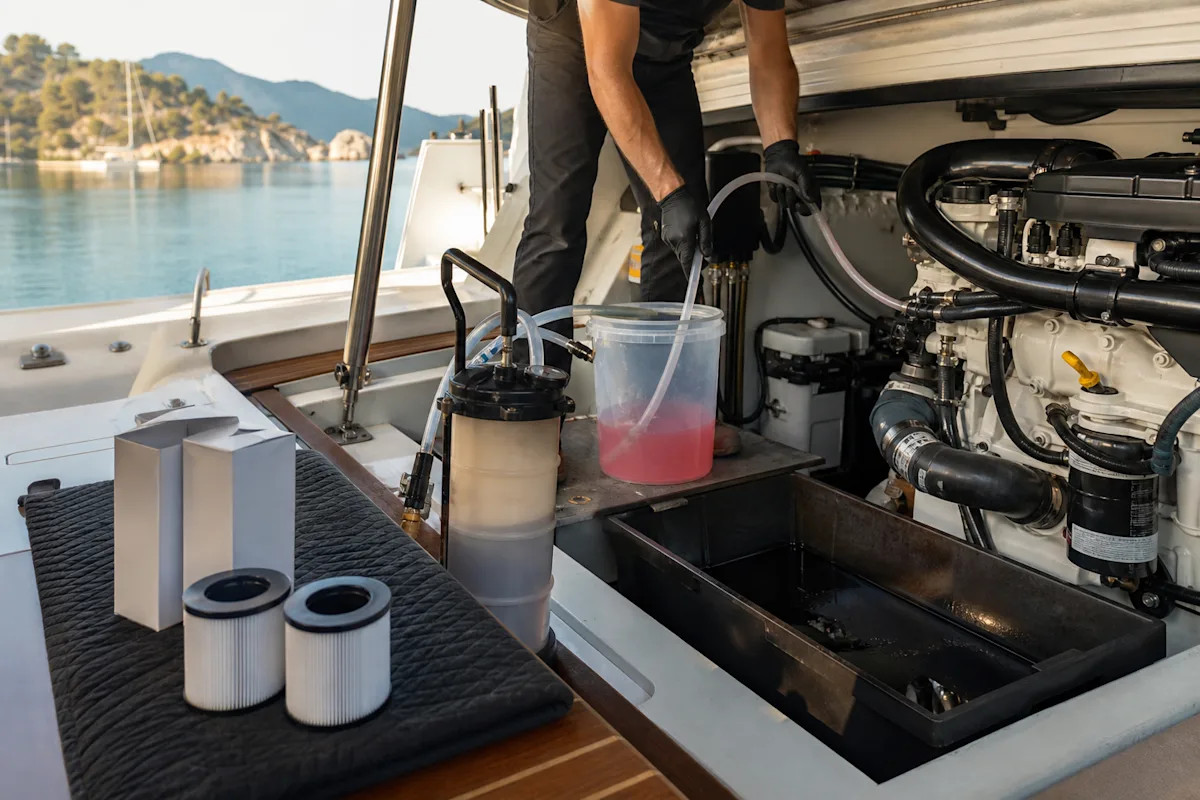
Preparing the engine for winter is the cheapest insurance you can buy for a healthy spring start. The real enemy of a little-used engine over a long winter is not running — it is standing idle: condensation, sticking seals and stale fuel all take their toll quietly.
The table below explains the basic winter lay-up tasks and why they matter.
Marine engine winter lay-up tasks
Task | Why it matters |
|---|---|
Change oil and filter | The engine should sit through winter on clean oil, not acidic oil |
Check antifreeze | Protection against freezing and corrosion |
Fill the fuel tank | Reduces condensation space and makes diesel bug less likely |
Drain/protect the seawater circuit | Freezing can crack the pump and pipes |
Keep the batteries healthy | Float charger or top-up charging at intervals |
In marine practice, the rule is simple: the manufacturer’s hour interval or once a year, whichever comes first. An oil change before winter is especially worthwhile, because the engine should spend the winter on fresh oil.
The impeller should also be assessed at this point: a set impeller will not thank you in spring. The engine side of the winter lay-up list is the investment that makes the first day of the season trouble-free.
Frequently asked questions
Is it a good idea to run the engine now and then over winter?+
Short runs with only partial warm-up do more harm than good: if the engine stops before it reaches full operating temperature, condensation remains inside. Either run it long enough to warm properly under load, or do not run it and rely on the correct winter lay-up procedure.
Can I just change the oil in spring?+
No — the point is not whether the oil is fresh, but what is sitting inside the engine all winter. An engine left standing with acidic oil will wear throughout the winter; the rule is clear: go into winter on fresh oil.
Should the impeller be removed or replaced?+
Both can be right: for a long, definite lay-up, removing and storing it protects the vanes; for a short or uncertain lay-up, replacing an old impeller now is often more practical. Whichever you choose, label it clearly.
What is diesel bug, and how can it be prevented?+
It is microbial growth at the water-fuel interface in the tank; it blocks filters and can damage injectors. Prevention is a full tank to reduce condensation, fuel treatment, and regular draining of the water separator.