What Is NMEA 2000? The Common Language of Marine Electronics
The secret behind different brands of kit talking on the same screen: NMEA 2000. A plain-English guide to the network layout (backbone/drop), how it differs from older NMEA 0183, bridging options, and the most common installation mistakes.
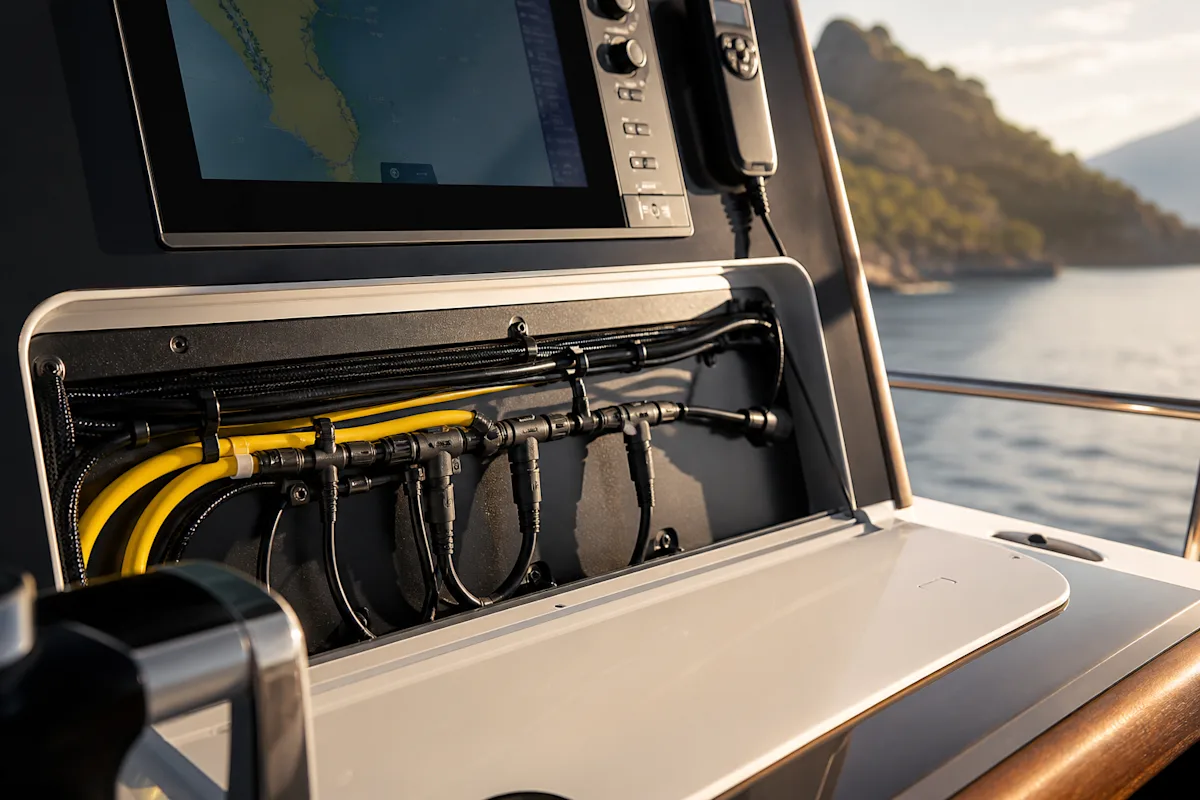
NMEA2000 is the standard that allows navigation and engine instruments on board to talk over a single network. Depth, wind, GPS, AIS, autopilot and engine data all connect to the same backbone; the information produced by one unit can be used by the others.
The practical benefit is integration: wind data can appear on both the display and the autopilot, while GPS position can be used on the plotter and in the VHF's DSC function. Instead of running separate cables to each unit, a single backbone and short drop cables are enough.
Installation and faults
Termination: there must be terminator resistors at both ends of the backbone; if one is missing, the network will be unstable.
Power and supply: the network has its own power feed, and as more devices are added the supply point becomes more important.
Connector quality: in the marine environment, a loose or oxidised connector is one of the most common causes of failure.
When adding a new device, the only real question is: does it speak the same language as the existing network? Brand choice is about the ecosystem; if the kit you buy works to the same standard, you can later bring autopilot, plotter and wind instruments together as one system.
Frequently asked questions
Can I connect my old GPS/VHF to a new screen?+
In most cases, yes: NMEA 0183 devices can join the network with an 0183-to-2000 converter. Details such as baud rate and sentence compatibility are set up during installation — don’t rush to write off the old gear.
Why does the network work sometimes and not others?+
The usual suspects, in order, are: missing or extra terminators, power supply problems, and loose T-connectors. All three can be found with a systematic check; swapping random parts is an especially expensive way to tackle this fault.
Does mixing different brands cause problems?+
Basic data such as speed, wind, depth and position generally passes between brands without issue; brand-specific advanced features such as sonar imagery and radar overlay usually require the same brand of display. That distinction should be agreed at the planning stage.
How can I tell whether I already have a network installed?+
If you can see the units wired back to a backbone using the same type of connector (usually Micro-C), then you have NMEA 2000. If there is no diagram, get one drawn up: half a day spent documenting the system will save time and money on every future electronics job.