What Is Anchor Dragging?
When the anchor breaks out of the seabed and the boat starts to drift — the one real emergency for a boat at anchor, and almost always preventable.
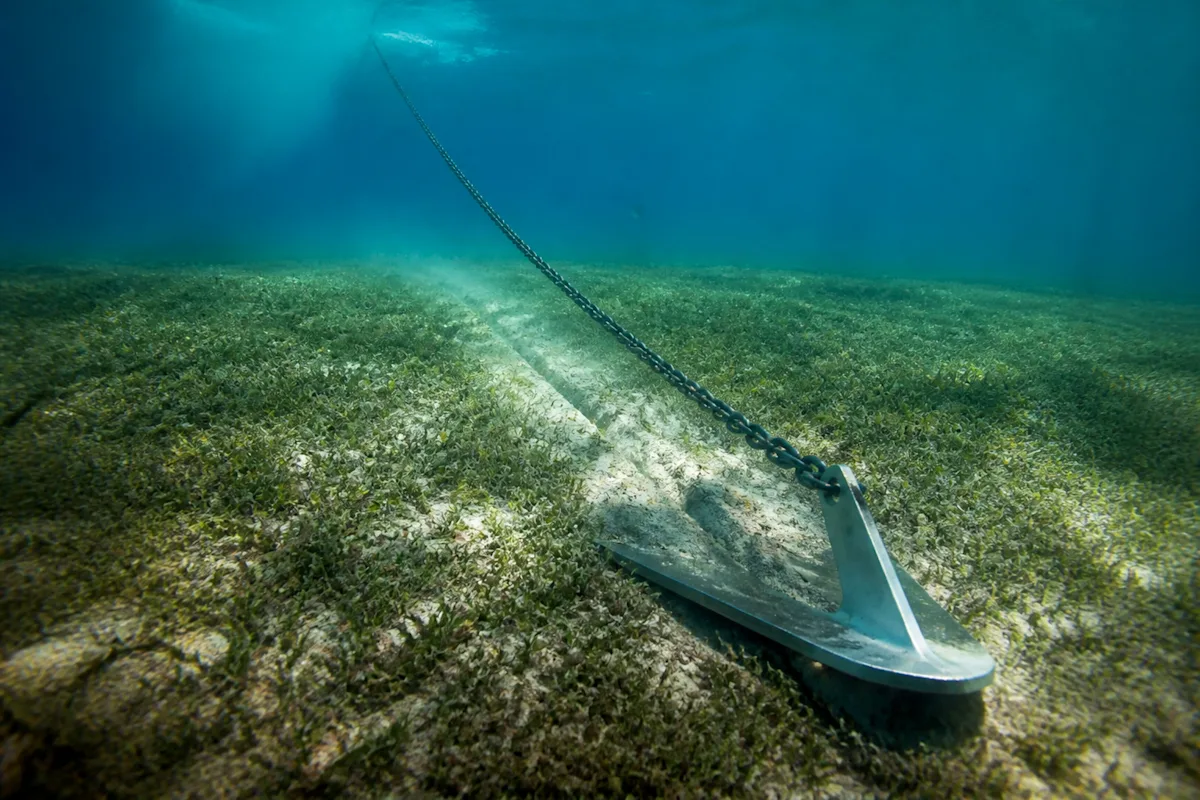
Anchor dragging is when a holding anchor is pulled out of the seabed by rising load or a change in direction, and the boat starts to drift. It is the common starting point for anchoring incidents — groundings, damage to neighbouring boats, night-time panic — and is almost always preventable.
The sneaky version is slow dragging: the boat creeps along metre by metre, and by the time it is noticed there is either a shore or another boat very close by.
Signs and prevention
Sign: a changing bearing, a GPS track opening out into a wider arc, and rhythmic snatching and slackening on the chain.
Causes: too little scope, a weed-covered bottom, an anchor that has never been load-tested, or an old-style anchor that cannot reset when the wind swings 180 degrees.
False confidence: the line 'it’s been holding for two hours'; dragging often starts when the wind veers or freshens, so the previous two hours prove nothing.
Three safeguards: after anchoring, back down on the engine to test the set, put a phone anchor alarm on (GPS radius), and memorise a bearing before turning in. When a wind warning comes in, the most important question is this: is this anchor, with this scope, ready for 30 knots and a 180-degree wind shift? If the answer is 'I’m not sure', the time to fix it is now, not at midnight.