What Is Fire Safety On Board?
From handheld extinguishers to an engine-room automatic system — a defence set-up built around the fact that no fire brigade is coming at sea.
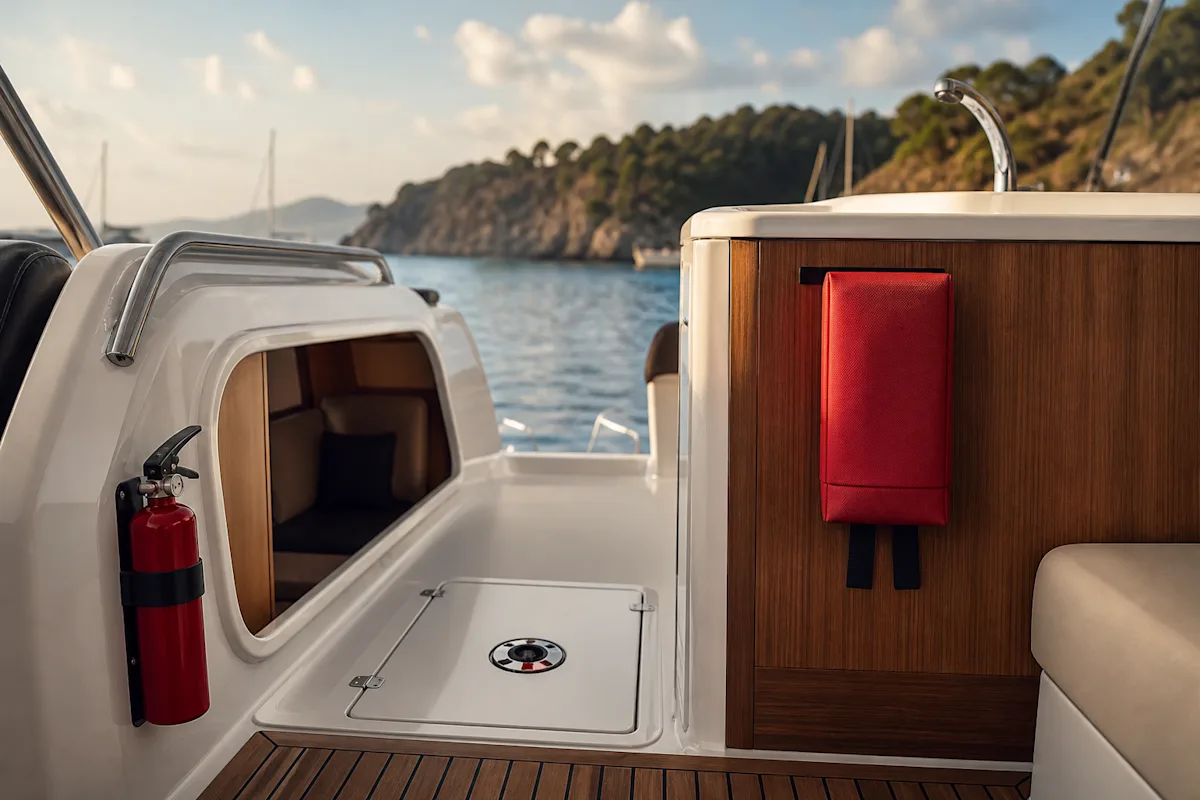
The maths of fire at sea is unforgiving: there is no fire brigade, no escape area, and a polyester boat burns fast. The first 30 seconds matter. A boat’s fire set-up has three layers.
The table below sets out those layers.
Fire-fighting layers
Equipment | Where / what for |
|---|---|
Portable extinguisher (ABC powder) | Accommodation spaces, general use |
CO2 / clean-agent extinguisher | Around electronics, leaves no residue |
Fire blanket | Galley, chip pan and hob flare-ups |
Automatic extinguishing system | Engine room, discharges automatically with heat |
The key rule is for the engine room: if fire is suspected, do not open the engine-room hatch, because the extra oxygen feed will intensify the flames. If there is no automatic system, discharge the extinguisher through a small access port (fire port).
Two weaknesses in extinguishers are managed by maintenance: if the gauge is not in the green, the unit is just dead weight (annual inspection), and powder extinguishers settle at the bottom with vibration (turn them upside down and shake them a few times a year). The extinguisher should be mounted above the escape route, not behind the fire; one left behind the flames is effectively worthless.