What Are COG and SOG?
Your GPS’s true course and true speed — and how they differ from the compass and speed log, showing the effect of current.
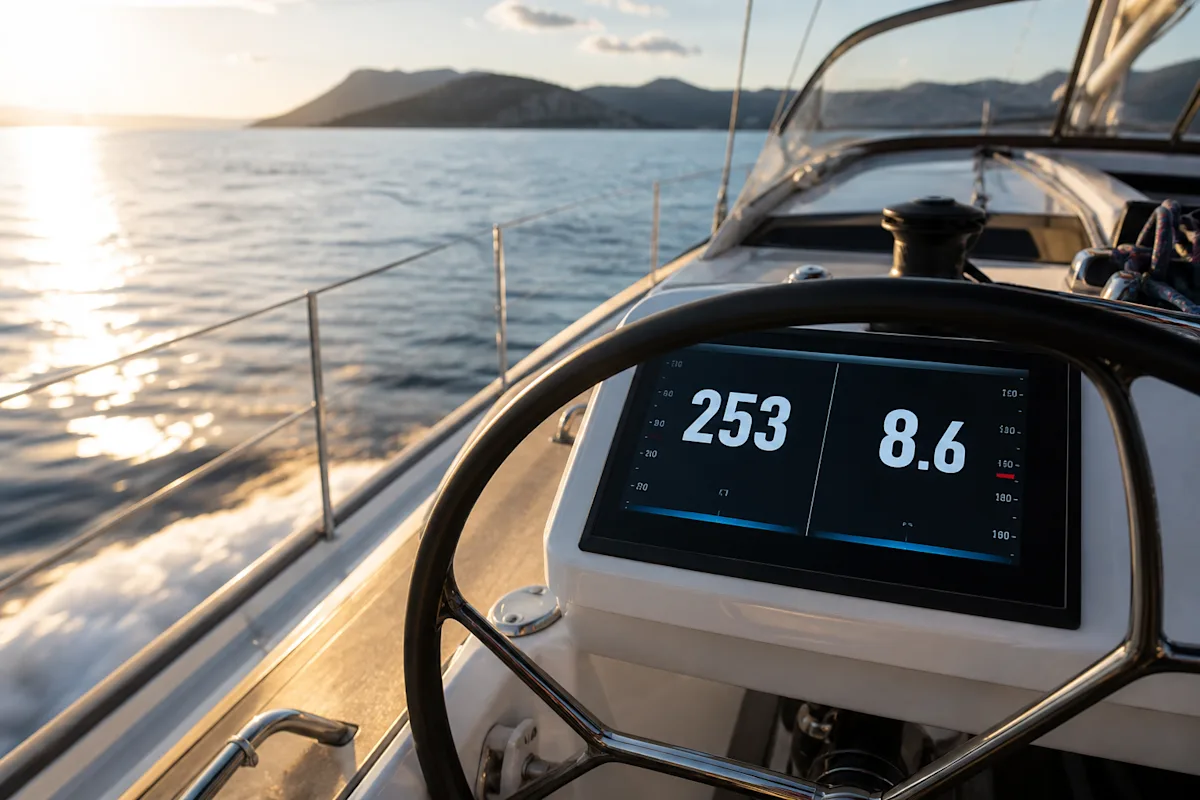
GPS gives two key readouts, and not mixing them up is one of the most useful lessons in navigation. COG (Course Over Ground) is the vessel’s actual direction of travel over the seabed, and SOG (Speed Over Ground) is the true speed over the seabed. These are different from the heading shown by the compass and the speed measured by the log.
The table below sets out the four readouts, what they tell you, and what they’re used for.
What each readout tells you
Readout | What it tells you | What it’s used for |
|---|---|---|
COG | Actual course over the ground | Where you’re really going, shoal edge |
SOG | Actual speed over the ground | ETA |
Heading | The direction the boat is pointing | Steering the boat |
Speed log | Speed through the water | Sail trim, performance |
The difference tells you about current and leeway: if the heading is 090 and the COG is 097, the boat is making 7 degrees of leeway. If the SOG is higher than the log speed, the current is pushing you from astern; if it’s lower, you’re punching against it.
Rule of thumb: when keeping a course, look at COG; for performance, look at the log; for ETA, look at SOG. And at low speed, COG becomes meaningless and wanders about; GPS direction data depends on motion, so on a stationary boat COG is not reliable.