What Is a Hydraulic Steering System?
A system that carries the helm’s movement to the steering ram using hydraulic pressure — quiet and effortless, but it will not forgive air in the circuit.
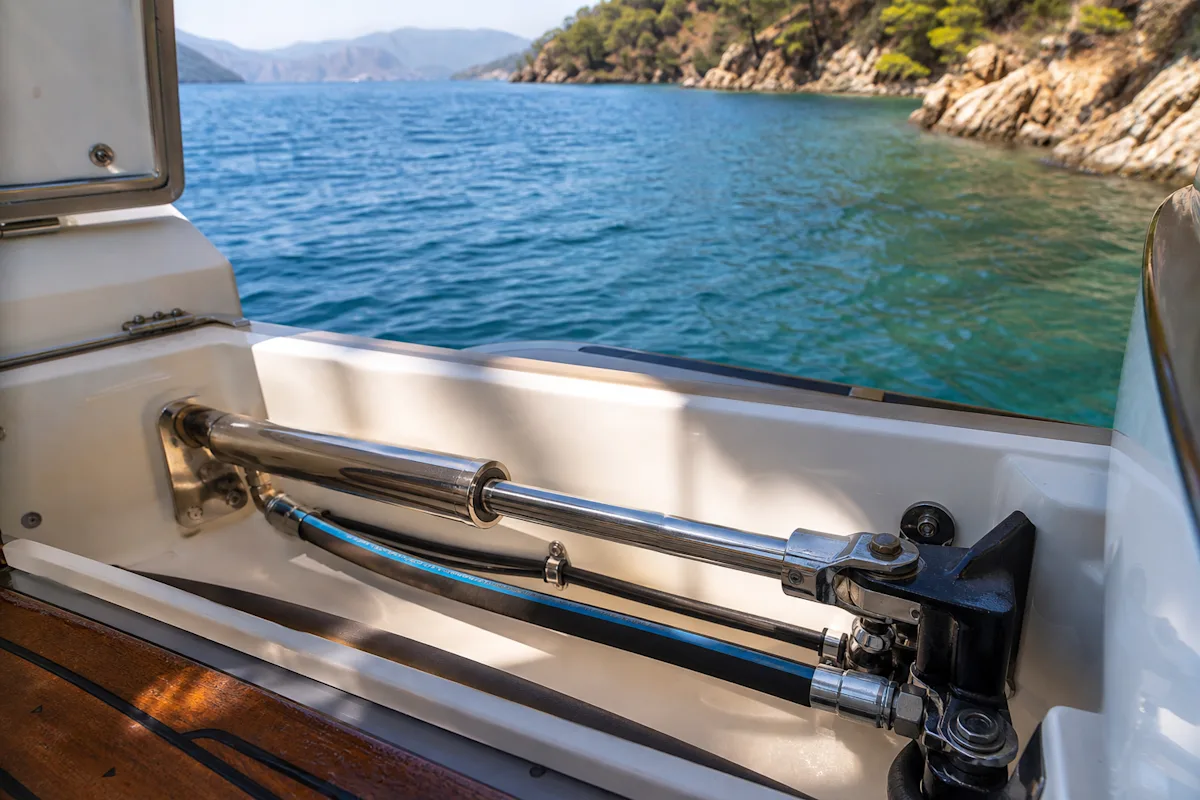
In hydraulic steering, the pump linked to the wheel (helm) sends oil through hoses to the aft cylinder; the cylinder turns the rudder stock or the engine leg. Unlike mechanical cable systems, there is no friction or backlash; fitting a second helm station is straightforward.
Its nature is clear: as long as the system stays sealed and air-free, it works perfectly. The table below shows the most common symptoms.
Hydraulic steering symptoms
Symptom | Cause |
|---|---|
Increasing wheel play | Air in the system or internal leakage in the helm pump; bleeding is needed |
Oil film on the cylinder rod | Seal wear, time for cylinder service |
Stiff, jerky steering | Wrong oil type, blocked lines or damage after freezing |
The smallest air bubble in the circuit shows up as wheel play, and play means a loss of steering precision. Monitoring oil level and leaks is almost the whole maintenance routine for this system.
A three-minute check at the start of the season: turn the wheel from lock to lock while counting the turns (if the number has increased, there is air in the system), wipe the cylinder rod with a cloth and look for oil marks, and check the helm reservoir level. Keep spare hydraulic oil on board; at sea, there is no quick fix for a falling level.