What Is an LPG (Calor Gas) System on Board?
The bottled gas arrangement that feeds the galley cooker - the rules and small but vital fittings that let you live safely with a heavier-than-air gas on board.
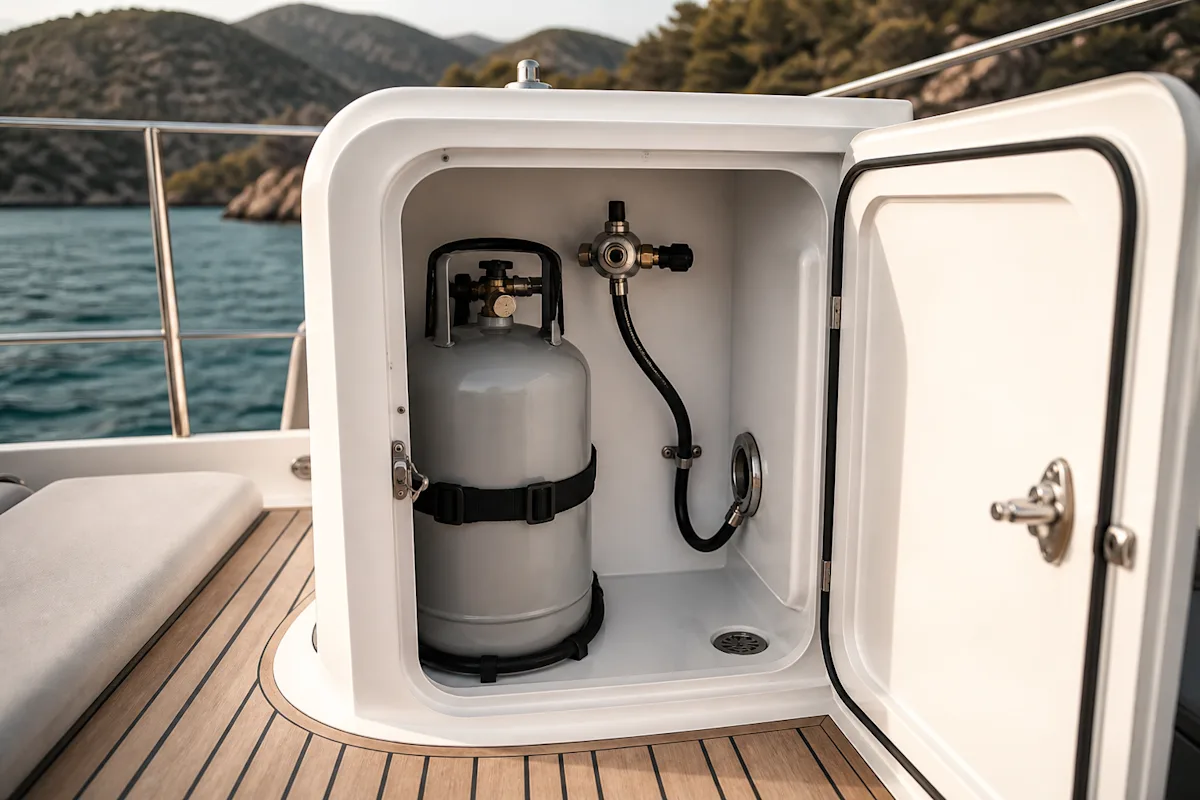
An onboard LPG system consists of the bottle stowed in a dedicated, overboard-draining gas locker, the regulator, an approved hose line and the cooker. A proper installation also has two extra safety items: a solenoid valve controlled from the cabin, and a gas detector mounted at bilge level.
The key physical fact is this: LPG is heavier than air. If it leaks, it does not rise away with the smell; it quietly sinks into the bilge and pools there. That is what makes a boat different from a domestic gas installation.
Three basic pillars and the day-to-day rule
Locker drainage: the drain at the bottom of the gas locker must discharge overboard; if it is blocked, any leak in the locker is turned into a funnel down into the bilge.
Hose schedule: a hose that is out of date, gone hard or cracked is the number one finding on an LPG line.
Daily rule: cooking finished, solenoid off (or the bottle valve, if there is no solenoid). When leaving the boat for a longer period, the bottle valve is always shut.
A simple leak check is the same as at home: use soapy water on the joints; if bubbles appear, there is a leak. Never use a lighter. Detectors also have a service life (typically 5 years); a dead detector is more dangerous than no detector at all, because it gives you false confidence.