What Is a Marine Diesel Turbo?
A turbine driven by exhaust gases that forces extra air into the engine - a force multiplier, but often the first casualty on boats run at idle.
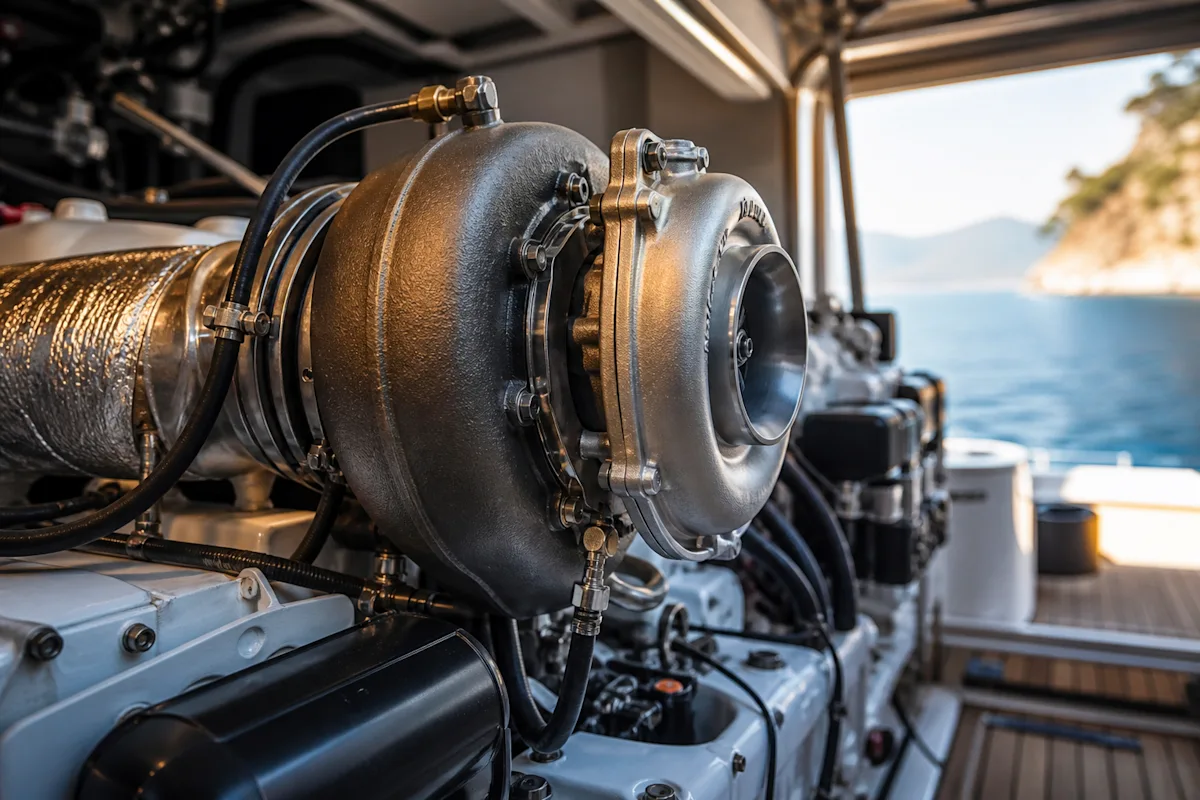
A turbo is a unit that sends pressurised air to the engine using a turbine driven by exhaust gases: more air, more fuel burnt, more power from the same engine. It spins at tens of thousands of rpm and is lubricated by engine oil.
Its nature needs to be understood: diesels like load. A boat’s typical use profile - long idling and low revs - is exactly what a turbo dislikes, and it lets soot build up on the turbine blades. On a yacht, the phrase 'the engine hardly ran, it’ll be spotless' is often the opposite of what happens to the turbo.
Three habits that keep a turbo alive
Load it: each time, run the engine at cruising revs for a while - a weekly 'clean-out run'.
Let it cool: after running hard at higher revs, let the engine idle for a few minutes to cool it down before shutting it off.
Stick to the oil: there is no separate turbo maintenance routine; the turbo is looked after through correct use and clean oil.
The signs are clear: a whistling or metallic noise points to bearing wear, loss of power plus black smoke suggests a sooty turbo (or a blocked exhaust elbow), and blue smoke with oil consumption means oil is getting past the turbo seals into the intake side.
Depending on the brand and how it is used, the elbow and turbine are inspected at set hours; many manufacturers recommend replacement at a specified interval. If it has to come apart, having a replacement on hand before it goes ashore for inspection is standard workshop practice.