What Is POD Drive (IPS)?
Independent rotating drive units beneath the hull and joystick control - a technology that turns marina manoeuvring into child’s play, but demands strict adherence to the maintenance schedule.
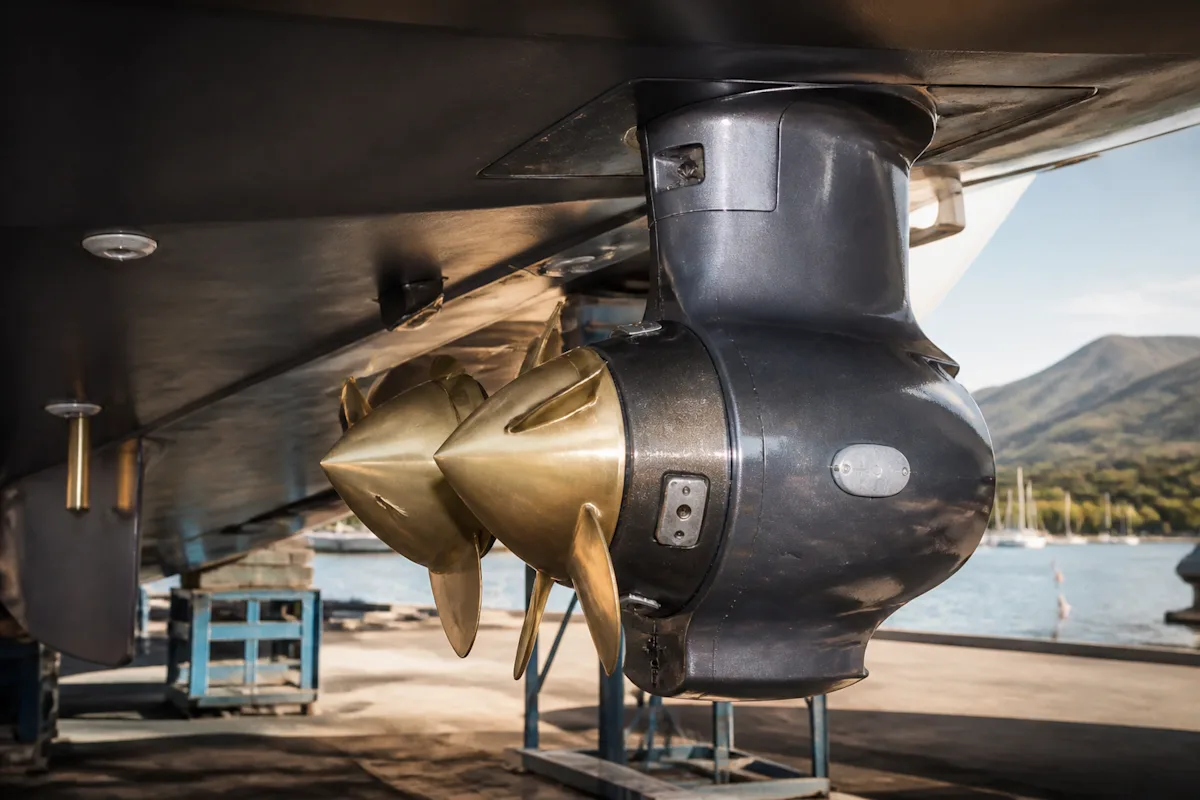
POD drive (the best-known example being Volvo Penta IPS) is a system that transfers engine power to independent units hanging below the hull, each able to rotate on its own axis. The real revolution is in the controls: with a joystick the boat moves sideways and turns on the spot; electronics angle the two pods separately and calculate the vectors.
The promise of efficiency and comfort is real, and the joystick has taken most marina anxiety out of the equation. The price is two disciplines.
Two disciplines
The maintenance schedule is non-negotiable: pod oils, seals and software are authorised-service work; ‘we’ll get it done later’ is the most expensive phrase in this system.
There must be a plan B: if the joystick fails, manoeuvrability is not lost, and operating with the levers (the normal twin-engine principle) should be the backup every POD owner knows how to use.
Because it is an expensive piece of underwater mechatronics, tolerance for impact and grounding is low; on some systems the pod is designed to shear off in a collision (protecting the hull, while the pod takes the hit). Draft calculations must also include the pod, as it is the deepest point of the hull.
Three questions for anyone buying a boat with PODs: are the service records complete, where is the nearest authorised service point, and is the pod covered by insurance? A once-a-year berthing practice without the joystick is also a sensible safeguard, showing due respect for the electronics.