What Is Propeller Pitch?
The theoretical distance a propeller would travel in one turn — the figure that shows whether the engine can reach its correct rpm.
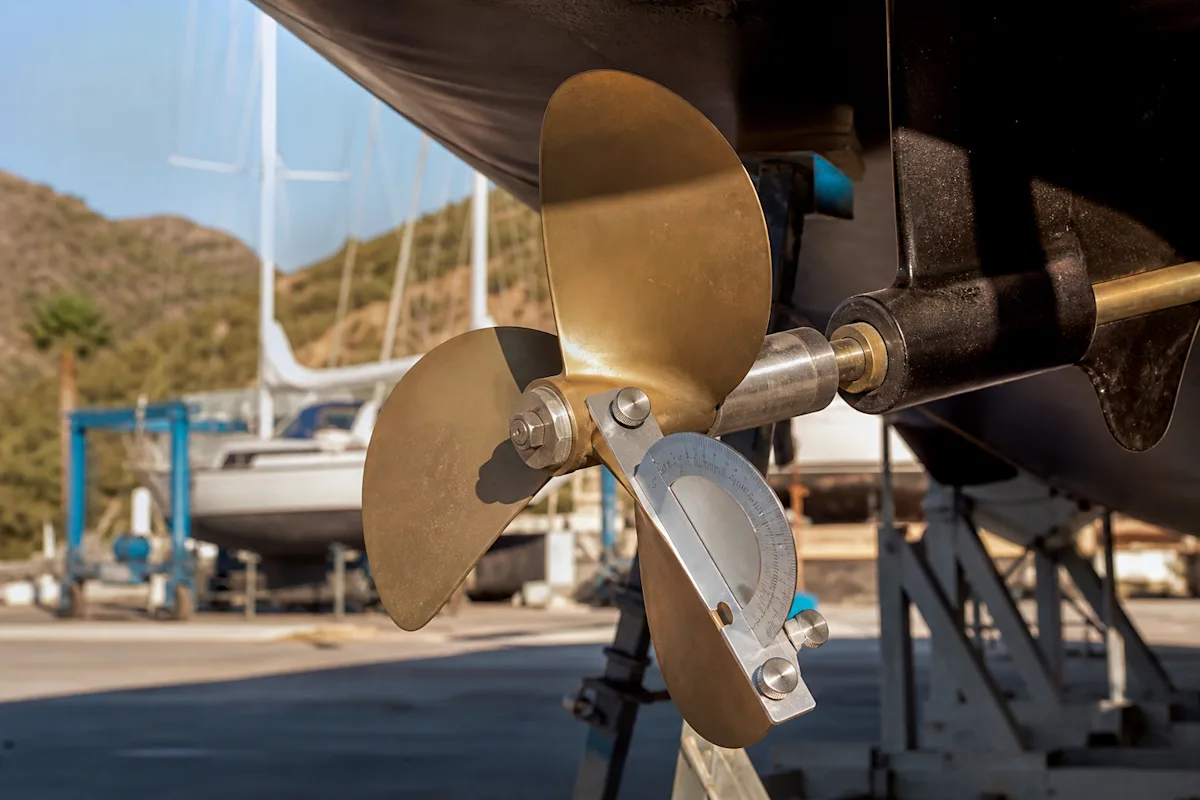
Propeller pitch is the theoretical distance a propeller would travel in one full turn. A propeller is referred to as '18x14': the first number is the diameter, the second is the pitch (inches). As pitch increases, the propeller effectively goes up a gear — more distance per turn, but more resistance as well.
The right propeller allows the engine to reach the manufacturer’s rated rpm at full throttle. The symptoms of the wrong pitch are shown on the rev counter. The table below sets out the two most common signs, together with their cause and what they mean.
Symptom - cause - meaning
Symptom | Possible cause | Meaning |
|---|---|---|
Can’t reach rated rpm at full throttle | Pitch too high, hull below the waterline is fouled, or the boat is heavy | The engine is labouring: smoke, heat, overload |
Rpm tops out but speed doesn’t come up | Pitch too low or propeller damaged | The engine is revving freely but the power isn’t going into the water |
Vibration at a certain rpm | Cavitation or a damaged blade | Balance and cause need to be checked together |
Propeller choice is not guesswork: full-throttle rpm is measured with a rev counter, compared with the rated rpm, and if there’s a deviation the pitch is discussed inch by inch. One often missed point is this: once you add a bimini, solar arch and full tanks, the 'factory propeller' can become an outdated choice.
Small pitted marks seen on a propeller are the signature of cavitation; they are not cosmetic, they point to a fault. That is why checking the propeller during a haul-out is always on the opportunity list.