What Is Twin-Engine Manoeuvring?
The art of turning a boat on the spot using the two engines separately — the secret to marina manoeuvres with barely a touch on the helm.
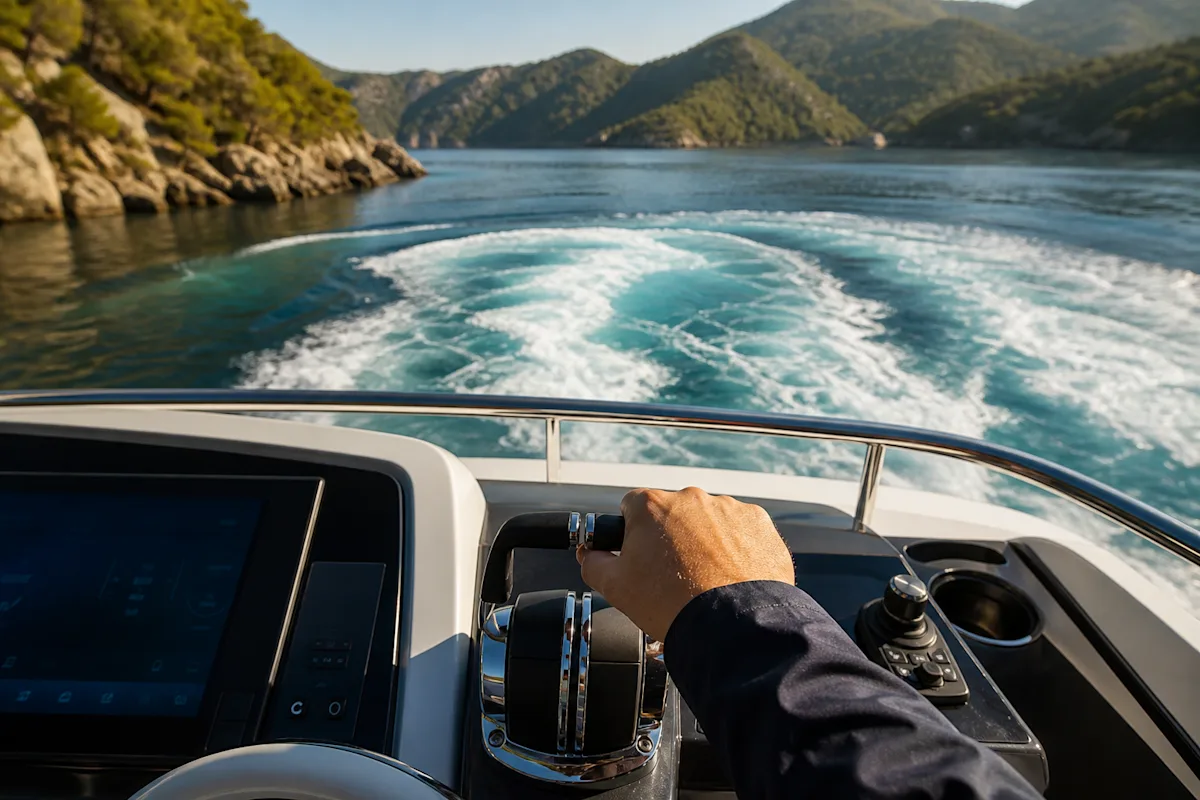
Twin-engine manoeuvring is handling the boat using the two throttle-and-shift controls separately. The basic move is to work them against each other: one engine ahead, the other astern, so the boat turns almost on its own axis. The helm is usually left amidships; direction comes from balancing the throttles.
In tight spaces, where a single-engine boat has to fight prop walk, twin engines give you proper control — but only if you know the technique.
Three rules
Gentle throttle: in opposed manoeuvres, patience matters more than power; idle revs are enough for most turns, and adding throttle increases speed, not control.
Helm amidships: direction is set with the throttles, and helm corrections are kept to a minimum.
Shifts at idle: don't snatch gear without bringing the engine back to idle between ahead and astern; it puts unnecessary strain on the gearbox.
A half-hour’s practice in an empty bay changes everything: picture a buoy, turn on the spot, crab sideways into the wind. If one engine fails on a twin-engine boat, you can still get her home — provided you've already tried asymmetric running on one engine.