What Is a Starter Motor?
A heavy-duty electric motor that takes a high current from the battery to turn the engine over first — the chief suspect behind the ‘click’ and a silent morning.
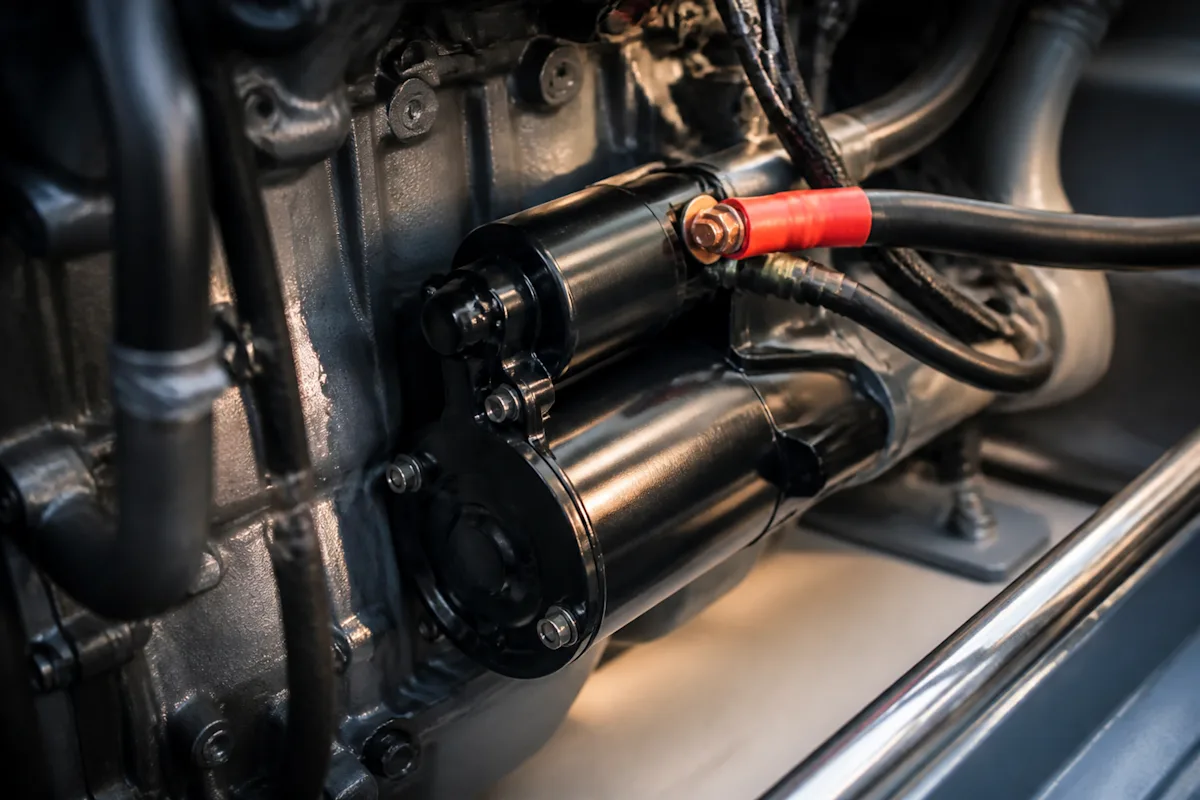
A starter motor is a high-current electric motor that, when you press the start button, drives its pinion into the flywheel and turns the engine up to firing speed. The boat’s highest instantaneous current is drawn at the moment of starting; that is why most starting problems are not in the starter motor itself, but in the chain carrying that current.
The table below sets out the three most common symptoms, their likely causes and the first check.
Starter faults
Symptom | Possible cause | First check |
|---|---|---|
Single ‘click’, then silence | Solenoid pulls in, but there is not enough power | Battery voltage, terminal posts, high-resistance connections |
Whirring | The pinion is not fully engaging the flywheel | Wear on the pinion and flywheel teeth |
Free-spinning sound | The starter turns, but the engine does not | Clutch (Bendix) failure |
Practical order afloat: battery voltage, tighten the terminal posts, switch the main isolator off and back on, then try again. Look at the voltmeter, not the starter; most ‘starter’s gone’ diagnoses are in fact just a loose terminal post.
At annual service, cleaning the terminal posts and earth point and coating them with petroleum jelly prevents the bulk of starting complaints before they begin.