What Is Engine Hours?
The engine’s total running time — the boat’s ‘mileage’, but the figure most likely to mislead if read on its own.
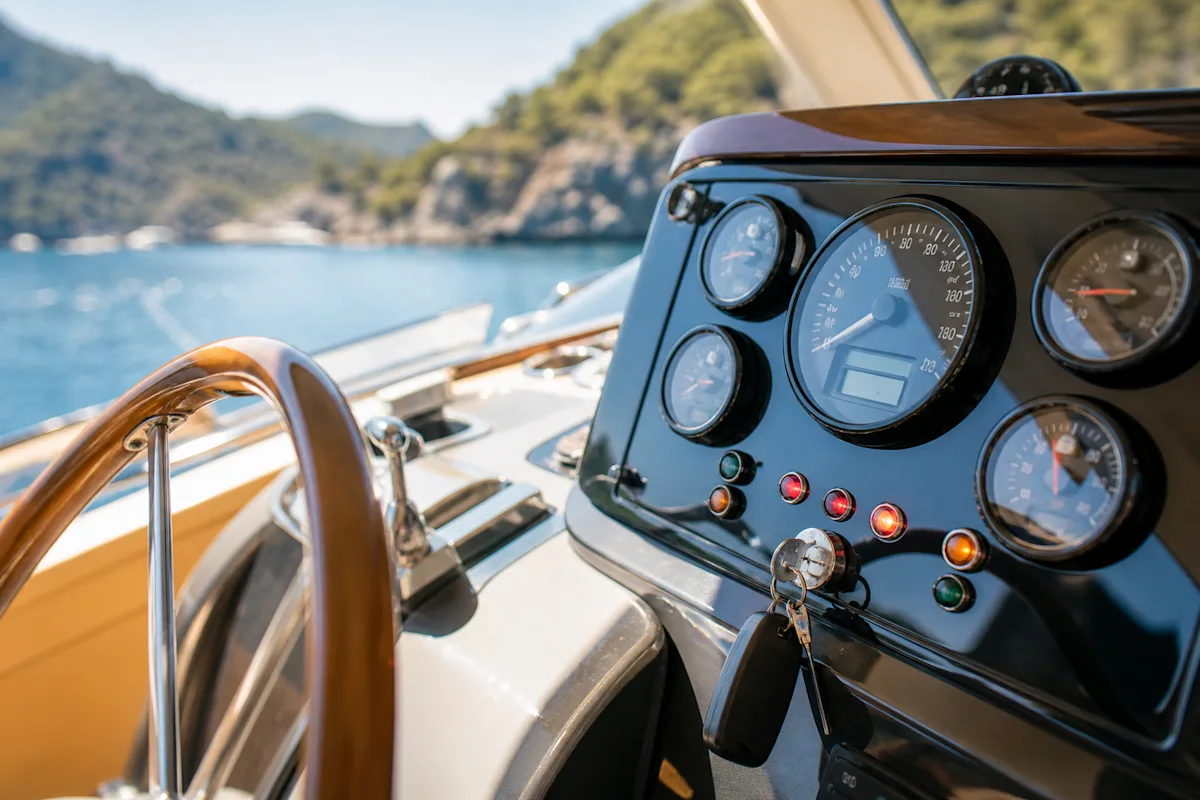
Engine hours is the counter that records the engine’s total running time; it is the marine equivalent of asking ‘how many kilometres has it done?’. Service intervals are also defined by hours. But the most common mistake is this: low hours are assumed to mean low wear.
In fact, for a marine diesel the real enemy is not working, but standing idle: an engine that runs for 20 hours a year can age worse than one that runs a regular 200 hours a year, with condensation, seals hardening and fuel left sitting. The right reading is always twofold: hours plus service history.
When buying
Hour/year extremes: A 10-year-old boat with 150 hours (always laid up) and a 5-year-old one with 4000 hours (ex-charter) both raise their own questions.
Counter reset: On a boat with a renewed panel, the hours may have been reset; cross-check against service records and general wear.
Tally with appearance: An engine showing 300 hours but with worn pulleys should make you suspicious of the counter.
Buying rule of thumb: a properly serviced 3000-5000-hour diesel tells a better story than an undocumented 800-hour one; with the right maintenance, marine diesels can go beyond 8000 hours. For your own boat, the reverse applies: do not leave the engine ticking over, use it; regular running under load is the cheapest engine maintenance there is.