What Is Stray Current?
An emergency fault where current leaking from the DC system into the water rapidly eats away at metal — doing in months what galvanic corrosion takes years to do.
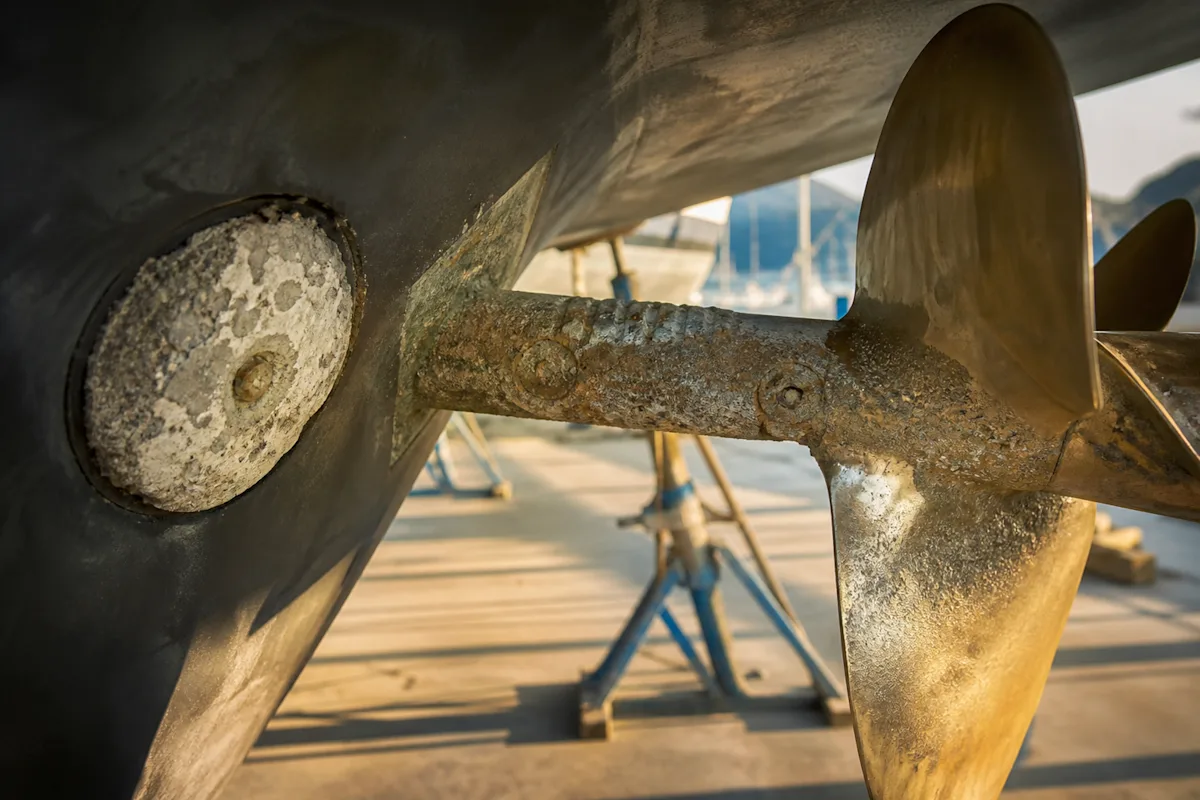
Stray current corrosion is where current leaking from the boat’s DC system into the water — through a damaged cable, wet connection or faulty appliance — makes the metal at the point of exit act like an anode and waste away quickly. It is often confused with galvanic corrosion, but the two are very different, and that difference determines the cure.
The table below sets the two side by side. The key distinction is speed: galvanic action is measured in years, stray current in weeks.
Galvanic corrosion - stray current
Feature | Galvanic corrosion | Stray current |
|---|---|---|
Source | The metals’ own chemistry | Current leaking from the boat’s DC system |
Speed | Slow, years | Fast, weeks to months |
Symptom | Anodes waste away steadily | Propeller/shaft turns spongy within months |
Treatment | Anode, bonding, galvanic isolator | Find the source and switch it off (urgent) |
The ‘last haul-out the anodes were fine, then three months later the propeller went spongy’ story is almost always stray current, and it needs urgent diagnosis. The source is often embarrassingly small: a cable joint lying in bilge water, a fuse holder that has got wet, or a tired pump cable.
The diagnostic routine is straightforward: measure the hull potential with a reference electrode, then isolate the circuits one by one to see which fuse makes the deviation disappear. The preventive rule is simple: do not make cable joints below bilge level.