Navigation and electronics: installation, service, phased upgrade
With electronics the costly mistake sits at either extreme: swapping out the whole package when there's no need, or lugging a dead system along for years. The right question isn't "which is the newest" but "what does my boat need". At Care the job starts with an inventory: what works is kept, what can be bridged is bridged, what needs replacing is written down with the reason - and every installation is handed over with a sea trial.

Scope
Chartplotter & fishfinder
Screen and transducer installation, chart updates, second-station setup
Autopilot
System selection to suit the steering type, installation and sea-trial calibration
Radar & AIS
Radar installation, AIS receiver/transceiver setup and the MMSI registration process
VHF & communications
Fixed/handheld VHF, DSC registration, antenna and cable renewal
NMEA network
0183→2000 bridging, backbone setup - old and new units on one network
Brand service coordination
Raymarine, Garmin, Simrad warranty and authorised-service processes run through us
Brands we work with
Which electronics do we install?
The network comes before the brand: if the NMEA 2000 backbone isn't set up properly, the devices won't talk to each other whichever brand you buy.
Raymarine
Installation and serviceThe brand we work with most in installation and service coordination; widespread on the autopilot side.
Garmin
Installation and serviceOften preferred for chartplotters and multifunction displays; easy to add to an existing network.
Simrad
Installation and serviceComes up on radar and motor yacht consoles. Good bridging options with older gear during staged renewal.
Whatever the brand, the installation is calibrated on a sea trial; the settings and the updated network diagram go into your file.
How it works
Inventory & introductory check
A list of what works and what doesn't and the existing network diagram are drawn up; the need is settled with you.
Roadmap & quote
A phased plan: what changes today, what gets bridged, what can wait - with alternatives and reasons.
Installation & calibration
Calibrated on the sea trial; the settings and the updated network diagram are logged to your file.
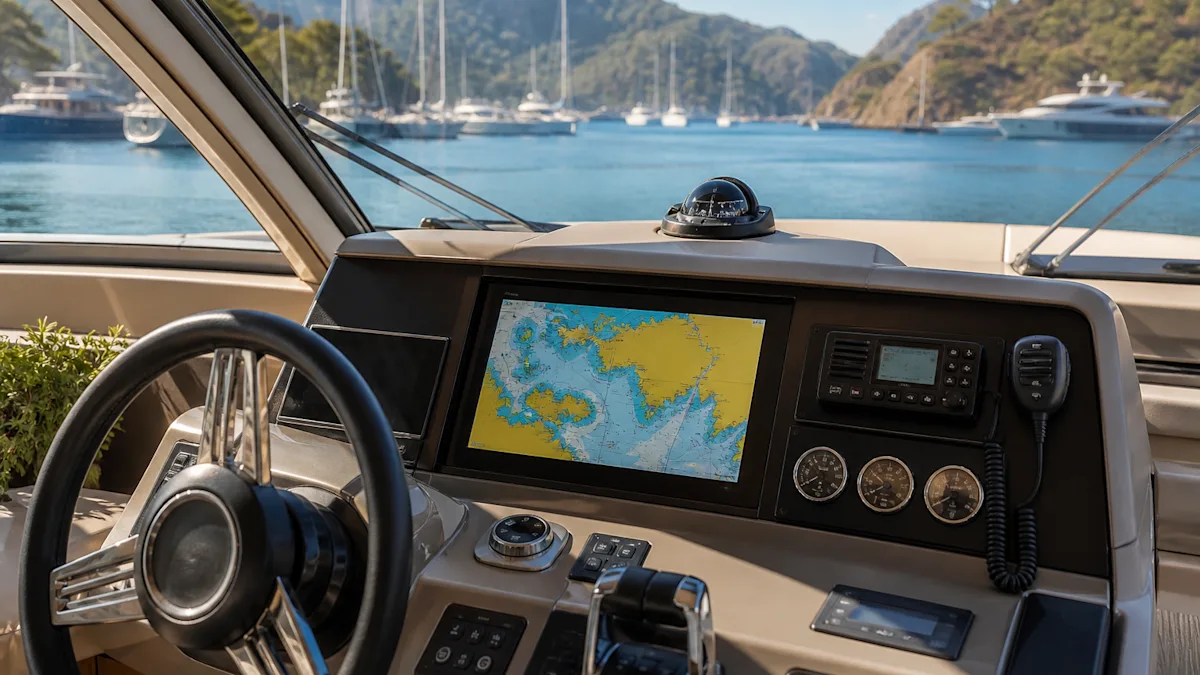
See the proof
Example: a 2009 electronics package - a full replacement wasn't recommended
The chartplotter and autopilot were renewed and the still-working radar kept via an NMEA bridge; a two-stage plan was written. (Real case photos will be added at launch.)
FAQ
Will my old units work with new ones?+
In most cases yes: NMEA 0183-2000 bridges let old and new units talk on the same network. If a full package replacement really is needed you'll see the reason in writing - don't take a 'replace the lot' line at face value before an inventory is done.
Can an autopilot be fitted to any boat?+
Yes, but the system is chosen to match the steering type: hydraulic, mechanical and sailing-yacht steering setups each need a different drive. A wrongly sized pilot either falls short or tires early - the choice is made by calculation.
Should I buy radar or AIS?+
They do different jobs: AIS shows boats carrying a transmitter and is cheap; radar also picks up a rock, an object with no boat, and a boat with no AIS. If you sail at night or in fog the order is usually AIS first, then radar - we advise to suit how you use the boat.
Can I do the installation myself?+
Wiring the unit is the easy half of the job; the transducer placement, cable route, power protection and calibration decide the result. If you've done your own installation, we can come out for the calibration and network setup alone.
Why does calibration matter so much?+
An uncalibrated compass/pilot hides its fault in calm weather and shows it in a swell. The last step of every installation is a sea trial: deviation tables are drawn up and the settings saved to your file.
Which brand do you recommend?+
We're independent; what decides it is your existing ecosystem and your needs. Whatever brand of infrastructure is already on the boat, staying with it usually lowers the total cost - if we recommend something different, we put the reason in writing.
On this topic: guides & glossary
For those wondering about the terms: the guide and glossary entries below explain this service in depth.
 What Is NMEA 2000? The Common Language of Marine ElectronicsGuide
 Boat Electronics Accessories: What’s Essential, What’s a Luxury?Glossary
 Compass Variation: What Are Variation and Deviation?Glossary
 Internet on a Boat: Starlink and AlternativesGlossary
 What Are COG and SOG?Glossary
 What Are EPIRB and PLB?Glossary
 What Are Lighthouse Characteristics?Glossary
 What Are Nautical Miles and Knots?Glossary
Let us see your boat on site
Start with a free introductory check; both the quote and the decision in writing.
⭐ Google 4.9 · 82 reviewsTÜRSAB memberSame-day for emergencies
Takes 30 seconds