Boat battery and energy systems: decisions by measurement, a costed installation
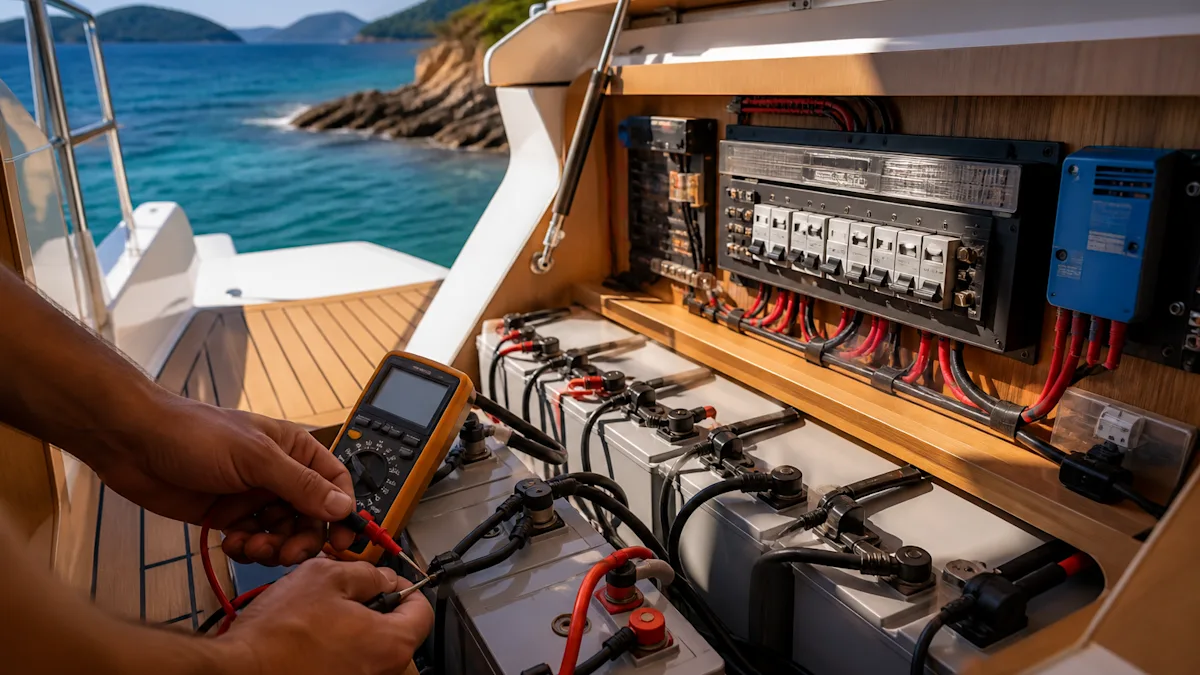
The battery is the part most often replaced needlessly on a boat - because the call is usually made without measuring. At Care, energy work starts with an audit: the capacity of your existing batteries is tested, your boat's real consumption is worked out, and the recommendation rests on numbers. Sometimes the answer is a new system; sometimes it's a single sentence: no replacement needed.

Scope
Battery testing & replacement
Capacity (load) testing, AGM/gel servicing and installation, correct group sizing
Lithium conversion
BMS-based system design, alternator/charging compatibility, safety requirements
Charging systems
Charger unit, alternator, DC-DC chargers and shore power layout
Solar installation
Panel sizing from a consumption calculation, MPPT selection, shading analysis
Inverter & 220V
Correct power sizing, wiring and circuit protection
Monitoring
Shunt and battery monitors - turning consumption from guesswork into measurement
Brands we work with
What do we install in the energy system?
We install systems, not brands: we don't discuss products until consumption is measured and cable sizing and charging compatibility are worked out.
Victron
Installation and serviceThe system we install most often for lithium conversions, MPPT and inverters; whether the components actually talk to each other is verified by measurement.
Mastervolt
Installation and serviceComes up on the charging and distribution side; rather than replacing a system wholesale we prefer to extend it with compatible components.
Device serial numbers, test values and the updated wiring diagram stay in your job file.
How it works
Energy audit
Consumption items are drawn up and the existing batteries tested; the table comes to you in numbers.
Costed quote
The amp-hour budget, unit makes/models and alternatives are set out in writing.
Documented installation
Serial numbers, test readings and the updated diagram are logged to your file.
See the proof
Measurement result: the battery bank didn't need replacing
The skipper had recommended replacement; the capacity test read 87%. The verdict: replacement deferred to 2027, the bank put on watch - logged in the owner's panel.
FAQ
Is my battery dead - how do I tell?+
Voltage alone misleads; the right method is a capacity test under load. We report the result as 'needed / not needed / can wait' - the first Second Opinion measurement is free.
AGM, gel or lithium?+
It depends on how the boat is used: a boat sitting plugged in at the marina and one lying at anchor in a bay don't have the same needs. At the end of the energy audit you see the cost and expected life of all three options side by side.
Does lithium suit every boat?+
No: alternator and charging compatibility, a BMS and correct wiring are essential; fitting lithium straight onto an old system can burn out the alternator. A conversion is a package job and is planned as one.
How many watts do I need for solar?+
It's worked out from the sum of your daily consumption (fridge, appliances, autopilot) and the shading. The quote states the expected daily output as a number - not 'a big panel is best', but the calculation talking.
Does staying permanently on shore power harm the battery?+
Not with the right charger unit - smart chargers hold it in maintenance mode. Old fixed-voltage units, though, boil off water; over wintering, that difference decides the battery's life.
What do I have in hand after the installation?+
The unit invoices, serial numbers, test readings and the updated wiring diagram are in the job file on your panel - your boat's energy system becomes documented.
On this topic: guides & glossary
For those wondering about the terms: the guide and glossary entries below explain this service in depth.
 Boat Battery Measurement Guide: Voltage Table and Capacity TestGuide
 How to Protect Boat Batteries Over Winter? A Guide to Avoiding the Dead Battery BillGuide
 Sizing a Boat Solar System: How Many Watts Do You Need?Guide
 Switching to Lithium on Board: A Real Cost-Benefit AnalysisGuide
 What Are AGM and Gel Batteries?Glossary
 What Are Amp-Hours (Ah) and Battery Capacity?Glossary
 What Is a Battery Charger (Marine Charger)?Glossary
 What Is a BMS (Battery Management System)?Glossary
Let us see your boat on site
Start with a free introductory check; both the quote and the decision in writing.
⭐ Google 4.9 · 82 reviewsTÜRSAB memberSame-day for emergencies
Takes 30 seconds